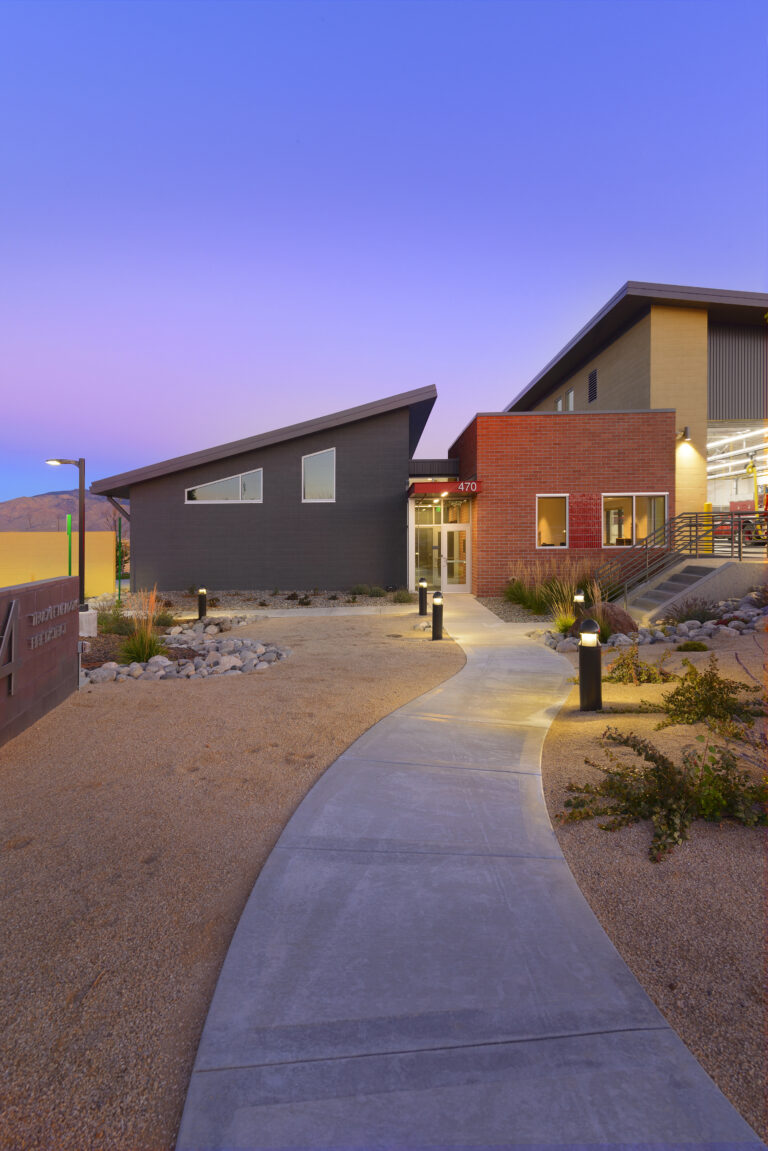
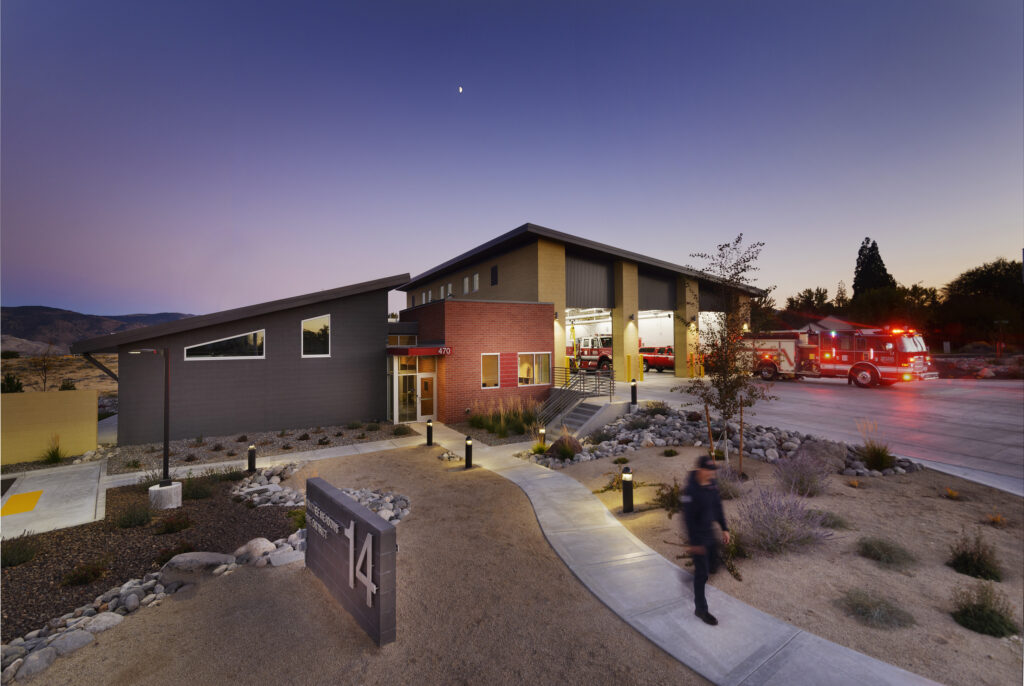
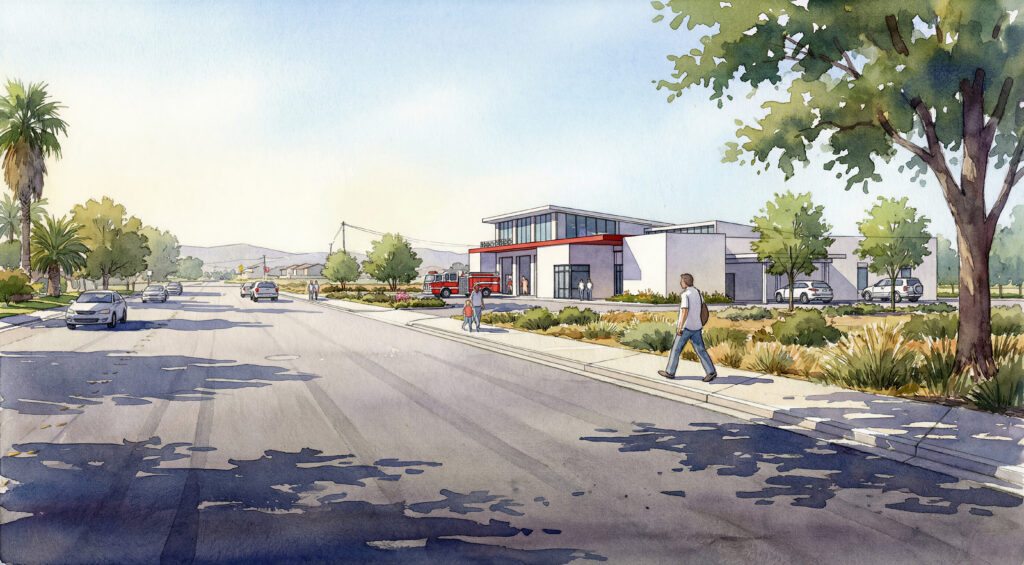
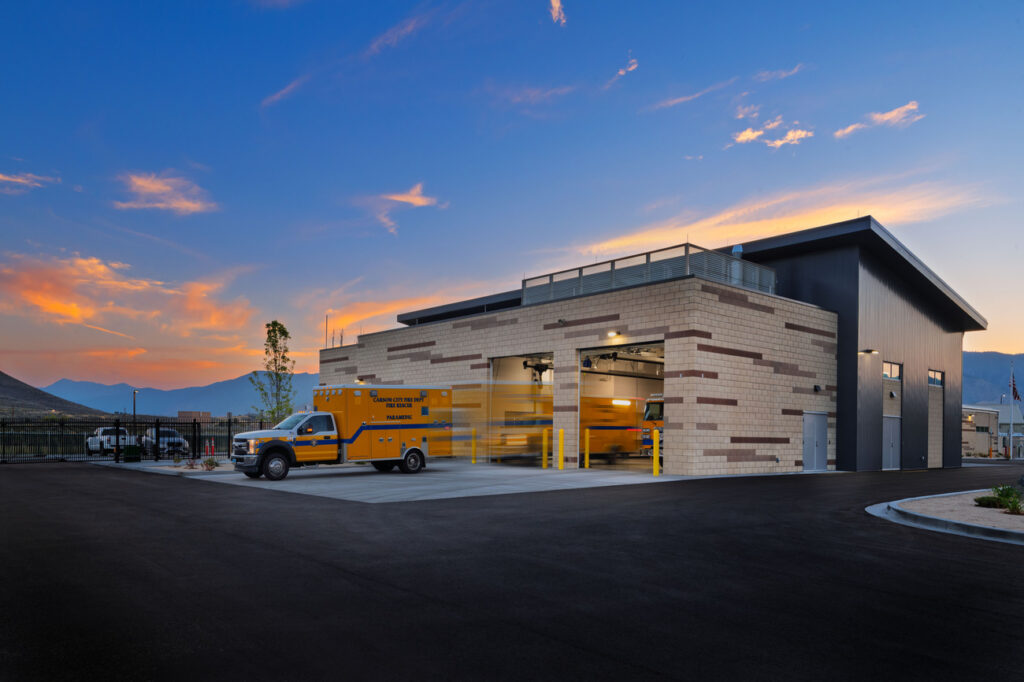
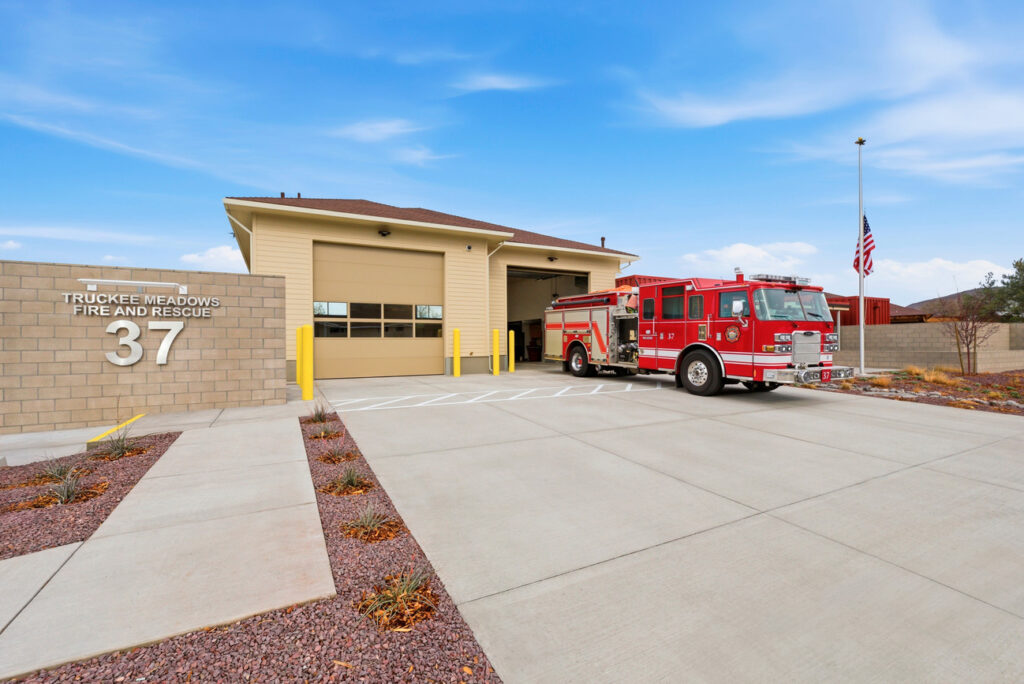
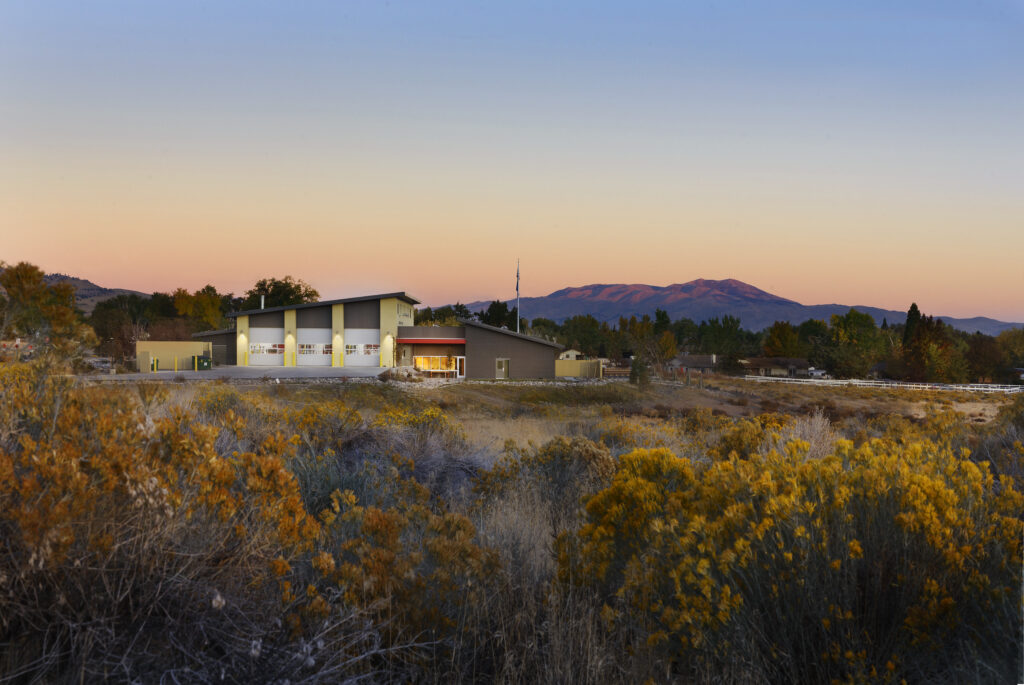
TSK has a long legacy of designing fire stations, with projects that date back to the earliest decades of our 66-year history. In the 2010s, we began changing the conversation around the project type, integrating cutting-edge research on firefighter health into our designs to create facilities that prioritize the physical and interpersonal needs of first responders.
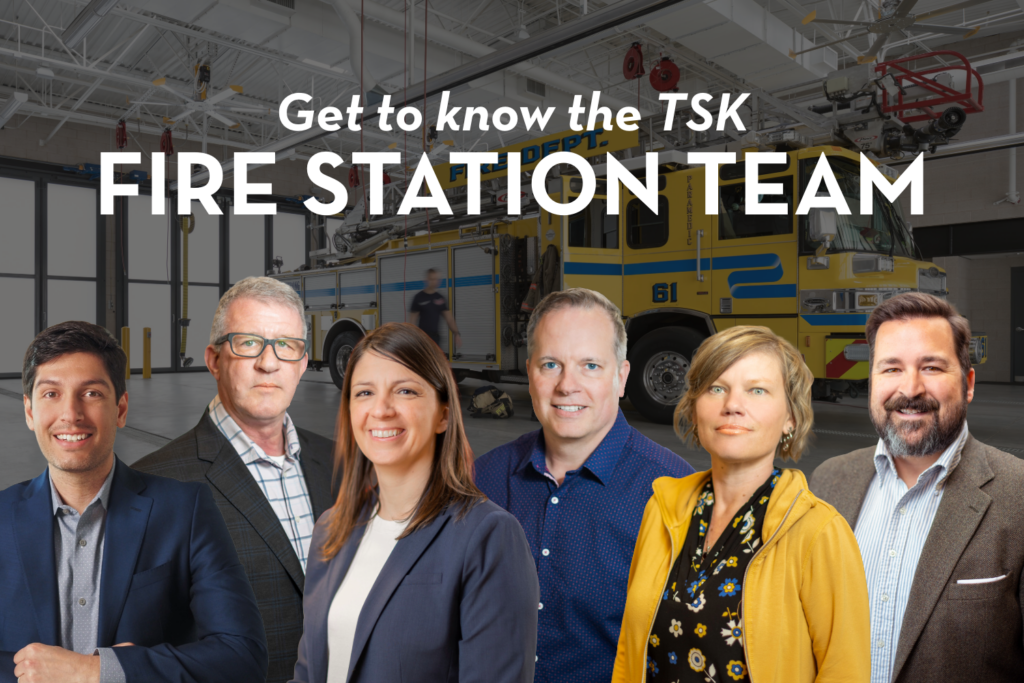
But just like fighting fires, designing fire stations takes a team. TSK’s innovations in the field have been made possible thanks to the expertise of our fire station designers, whose collective experience spans multiple stations, a wide range of civic projects rooted in operational excellence and public safety, a wealth of academic research, and more.
“We’re a fire station team,” said Director of Client Relationships Kevin Kemner. “All of our experiences come together.”
From the informed questions we ask to the rapport we’ve established with firefighters and their chiefs, our fire station team brings care and expertise to understand client needs, streamline operations, and keep crews in top condition, so they’re ready to protect their communities.
A Team That Asks the Right Questions
Though many fire stations are similar programmatically, they exist in different regions, among different communities, on different sites that are occupied by different crews, and led by different chiefs. That’s why, for TSK, understanding the unique needs of an individual fire station always begins in conversation.
“It’s about knowing how to ask questions to get people to tell you what they need,” said Kemner.
On one hand, interview skills come naturally to Kemner, who discovered early in his career that he had a knack for teaching. For 21 years, he taught at the University of Nevada Las Vegas and served as the assistant director of the school’s architecture program while simultaneously practicing architecture at TSK.
“You ask students a lot of questions: What are you doing? Why are you doing it? How are you doing it?” Kemner said. “All of this fits into how we program a building, how you ask someone what they need, how you think your way through it, and how you think around it.”
On the other hand, learning to ask good questions was a process for Kemner, one he underwent on his earliest projects at TSK, including a maintenance operations building for the City of North Las Vegas.
“We had this great lab planner, and he asked the client if there would be optical instruments involved,” remembered Kemner. “When they said yes, he turned to me and said, ‘The building just got heavier.’ When I asked him to explain, he said, ‘The building will vibrate, and optics won’t work in vibrating conditions, so we have to make it stiffer, we have to move more air through fume hoods.’”
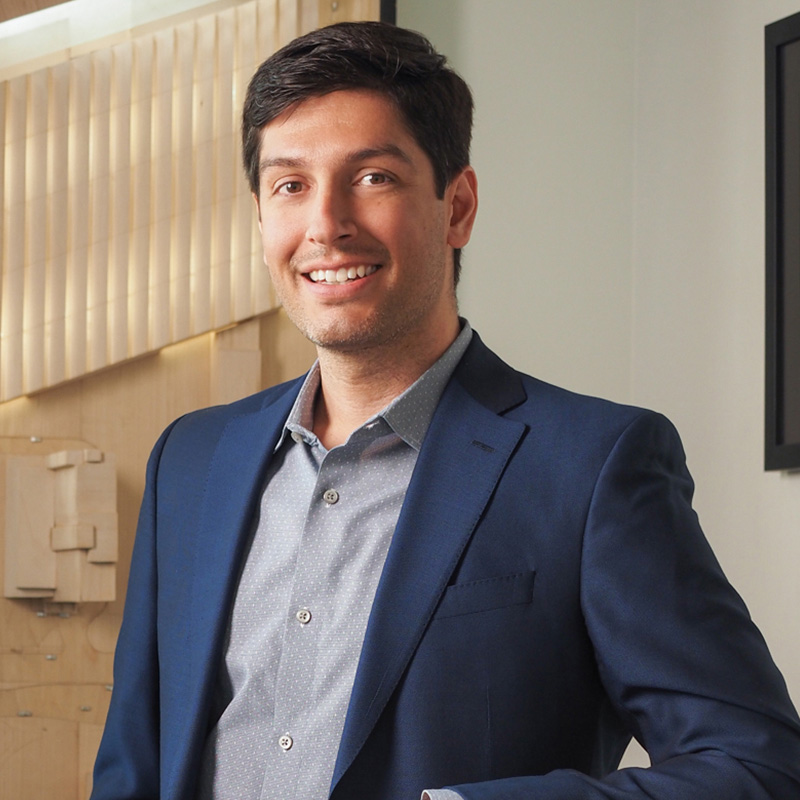
Kevin Kemner
Director of Client Relationships
For over two decades, Kevin’s career has lived at the intersection of practice and teaching, shaping both built work and future architects. Today, his work prioritizes firefighter health, safety, and the unseen systems that allow stations to support people in critical moments.
"Designing stations that fully support and make operations better—especially on the decontamination side, but also on the daily living side—is something our clients have said we excel at.”
-Kevin Kemner, Director of Client Relationships, TSK
Asking questions to surface practical and technical design implications is a skill Kemner has passed on to his colleagues through the years—including Senior Designer Chris Lujan, an award-winning architect and fire station thought leader who grew up in New Mexico, moved to Las Vegas in 2006, and has now been with TSK for two decades.
“TSK’s fire station team has been engaged in so many different project types, you start to find commonalities that allow them to have more informed questions and choices,” said Lujan. “When they engage clients, they’re asking questions that probably are not coming up in conversations with other architects.”
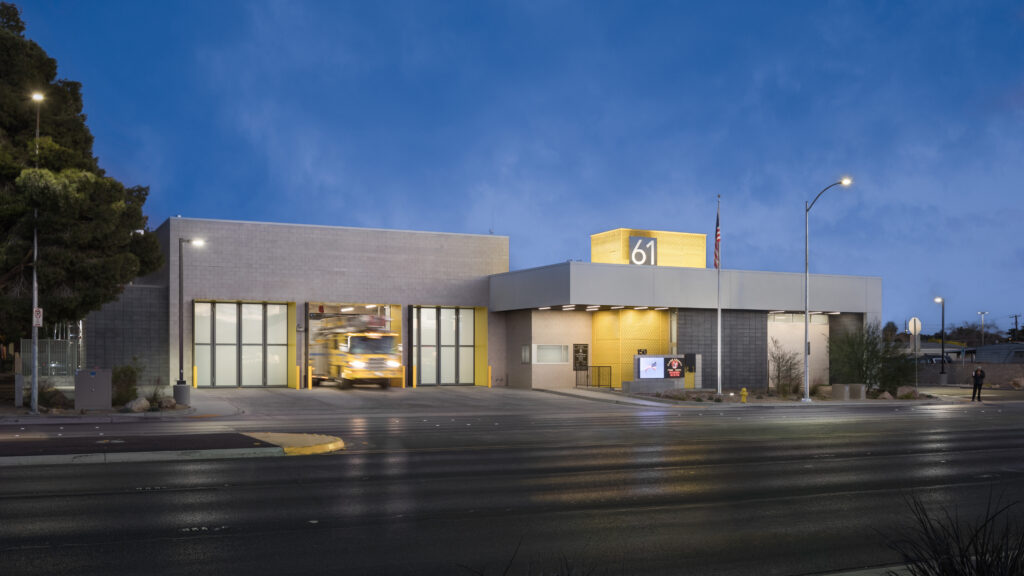
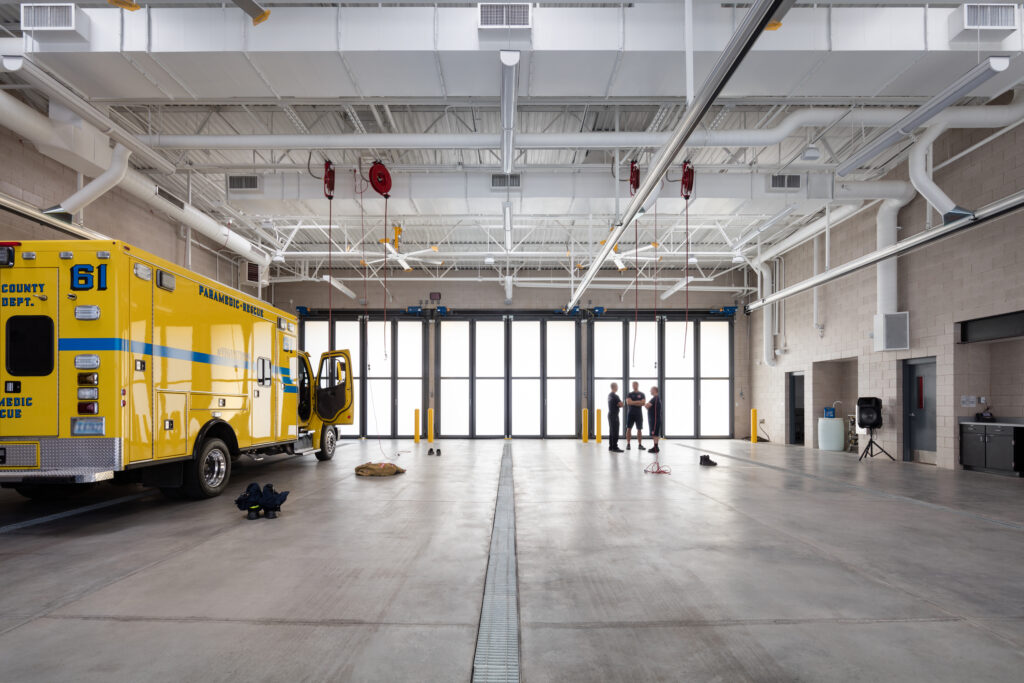
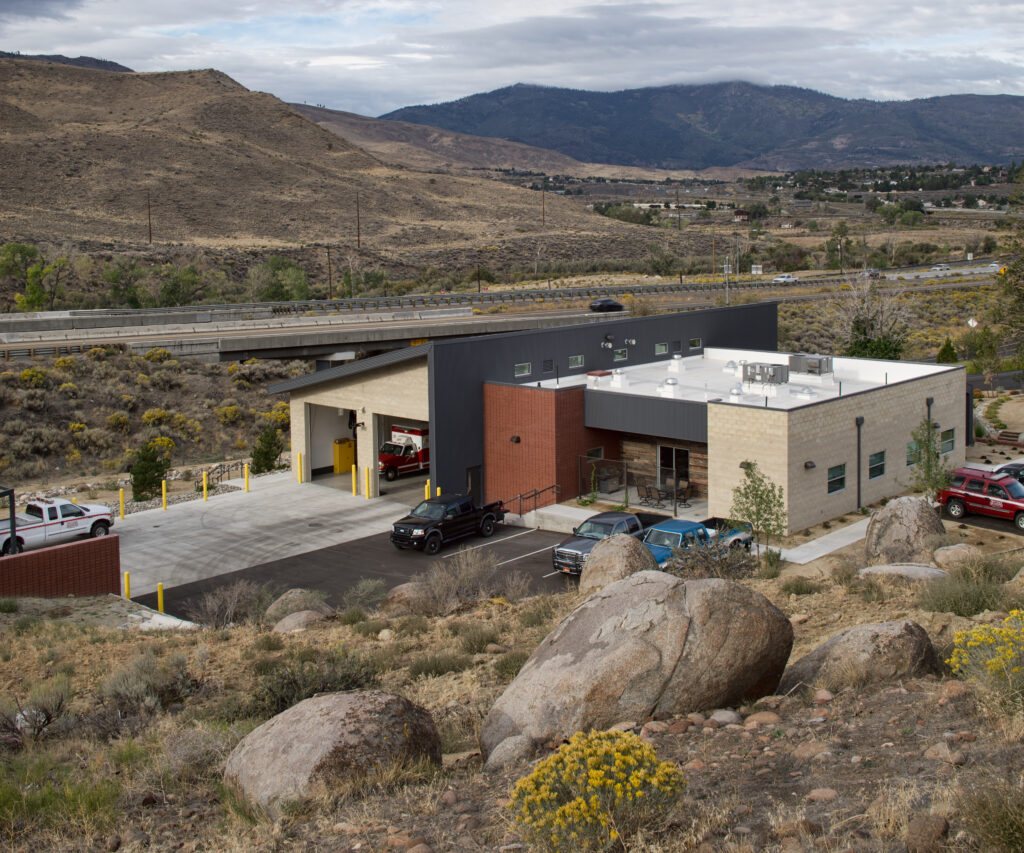
That rigor of questioning was what distinguished TSK in the eyes of the chief of Fire Station #61 in southern Nevada, a replacement for an existing station that TSK founder George Tate had designed decades earlier. One of the first questions Lujan asked, based on the size of the site, was about the equipment the crew expected to use.
“I wanted to start understanding their traffic needs and turning radii,” said Lujan, “and he said, ‘Wait, I thought you were the architect. Usually the engineers would be asking that!’”
Nevertheless, Lujan laid out his reasons for interrogating the issue, and soon enough, a productive dialogue began.
“His face lit up,” Lujan remembered. “He said, ‘Yes, okay, we can have these conversations because with one of our recent fire stations, it wasn’t until it was built that we found that question hadn’t been properly understood.’ It gave him reassurance that we were not coming in and telling him the building must look a certain way, or that he had to follow our lead. We were asking, how can we make sure your people can make your equipment work?”
In the end, the team worked with the client to build a mockup of the building within its footprint, setting up a crude structure with lumber to test the turning radii of the apparatuses. The exercise proved a success, and ultimately contributed to a high-performing fire station free of traffic challenges.
Chris Lujan
Senior Designer
Chris is a thought leader among TSK’s fire station cohort, helping teams across regions design facilities that are both highly functional and deeply responsive to the people who use them. Fire stations, to Chris, are not just buildings. “They’re fire houses,” he says, places that must be designed not only for work, but also for living.
"We were not coming in and telling him the building must look a certain way, or that he had to follow our lead. We were asking, how can we make sure your people can make your equipment work?"
-Chris Lujan, Senior Designer, TSK
A Team That Prioritizes Firefighter Health
Of course, a fire station is nothing without the crew that operates it. That’s why, teamwide, we’ve reached consensus on what fire station designs should prioritize.
“The most important consideration for the design of a fire station is the safety of the firefighters,” said Senior Designer Vince Novak, “whether that means protecting them from contaminants on their clothing when they come back from a fire, or preventing truck exhaust from getting into their living spaces.”
Fire stations are particularly fulfilling for Novak, who got his start 25 years ago in the world of exhibit design, but soon found himself disheartened by how much consideration went into trade shows and other events that only lasted a few days. It wasn’t long before he switched over to the path that brought him to TSK.
“It was kind of sad in a way, you did all this work that nobody’s going to see except for a few thousand people,” Novak said. “That’s why I went back to architecture school.”
By contrast, TSK’s stations are designed to persist decades into the future, while also keeping crews equally resilient through research-based measures. And though any number of firms pay lip service to evidence-based design, thanks to TSK’s strong ties to academia, we have the resources and connections to truly put research into practice.
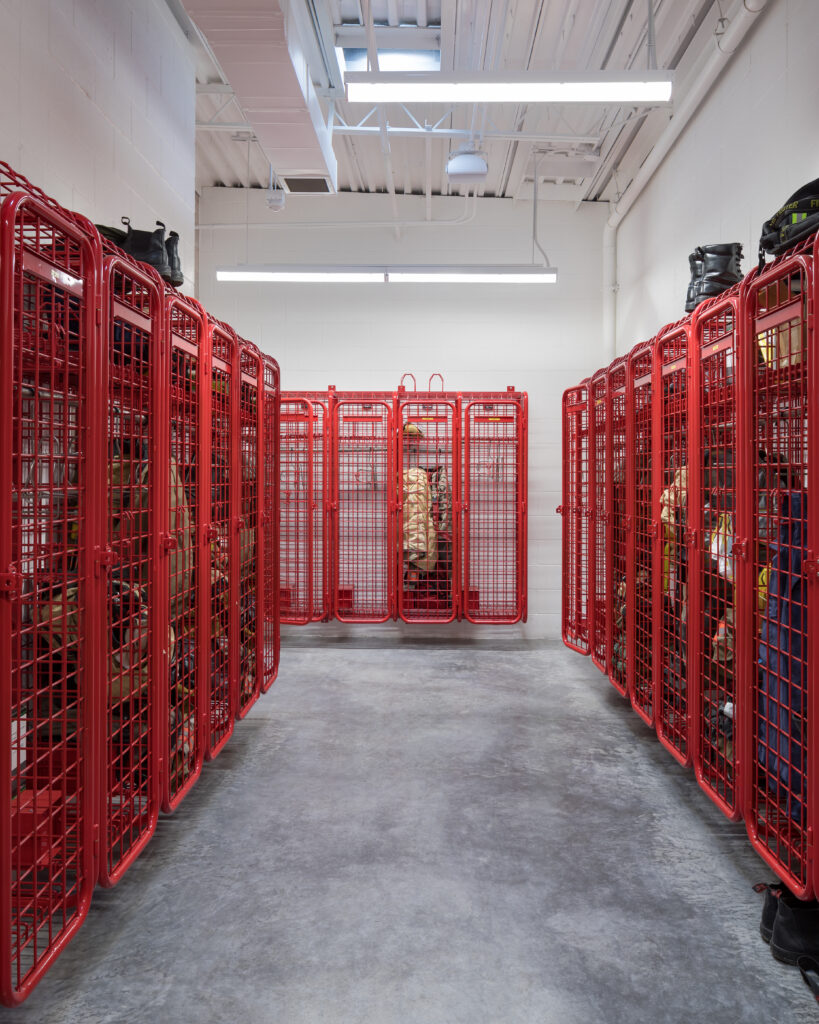
“There’s a growing issue these days with firefighter health related to batteries, especially lithium and ion batteries,” said Kemner. “When they burn, they produce heavy metal contaminants. They’re incredibly hard to clean off, and they’re also incredibly toxic. We’ve been developing solutions so that when firefighters come back from these fires, their personal protective equipment can be sequestered before it gets sent out of state for cleaning.”
Current solutions include designing a dedicated space where lithium-contaminated articles can be safely stored until they leave the premises.
Additionally, as a member of MOREgroup’s family of brands, TSK is connected to a broader network of architectural expertise that includes healthcare design experts E4H, with whom we’re exploring collaborations.
Vince Novak
Senior Designer
What Vince values most about fire station work is its clarity of purpose. The buildings are straightforward in intent, meaningful in impact, and designed to support people who serve their communities every day, often in dangerous conditions. “There’s a sense of pride in it,” he says. “You know these buildings matter.”
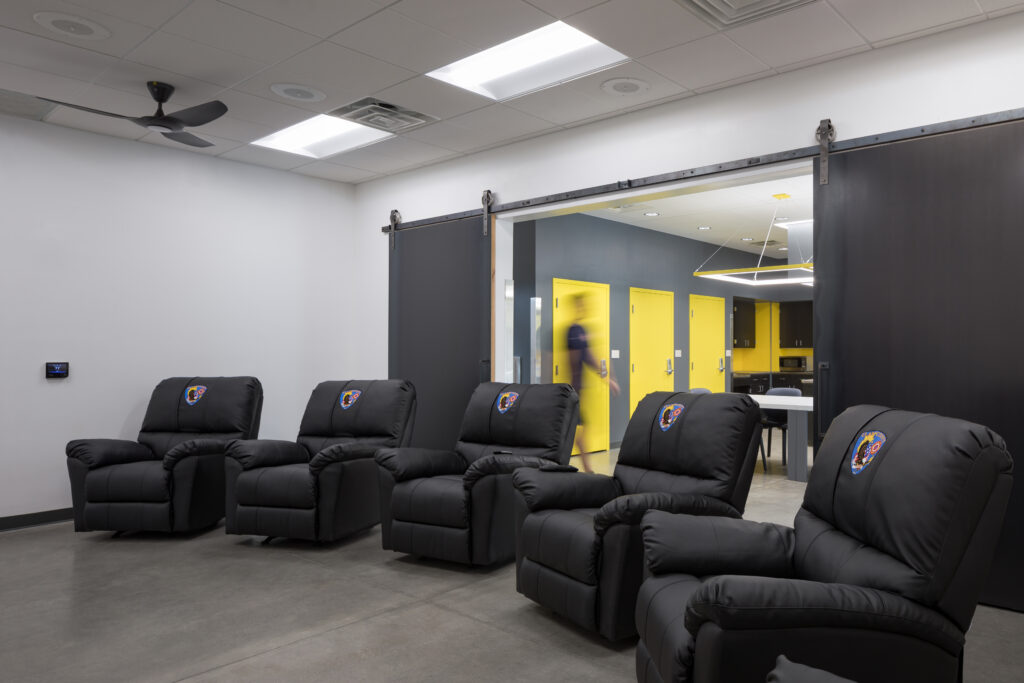
And though firefighter health is about creating separation—between social spaces and sleeping quarters, first responders and contaminants—it’s also about bringing people together.
The premium we place on regenerative, communal space made all the difference in 2025, when TSK was interviewing with Bickford Ranch’s fire department. Though the questions had been prearranged, the fire chief began deviating from the script. But instead of catching the team off guard, it allowed the heart of TSK’s design considerations to surface.
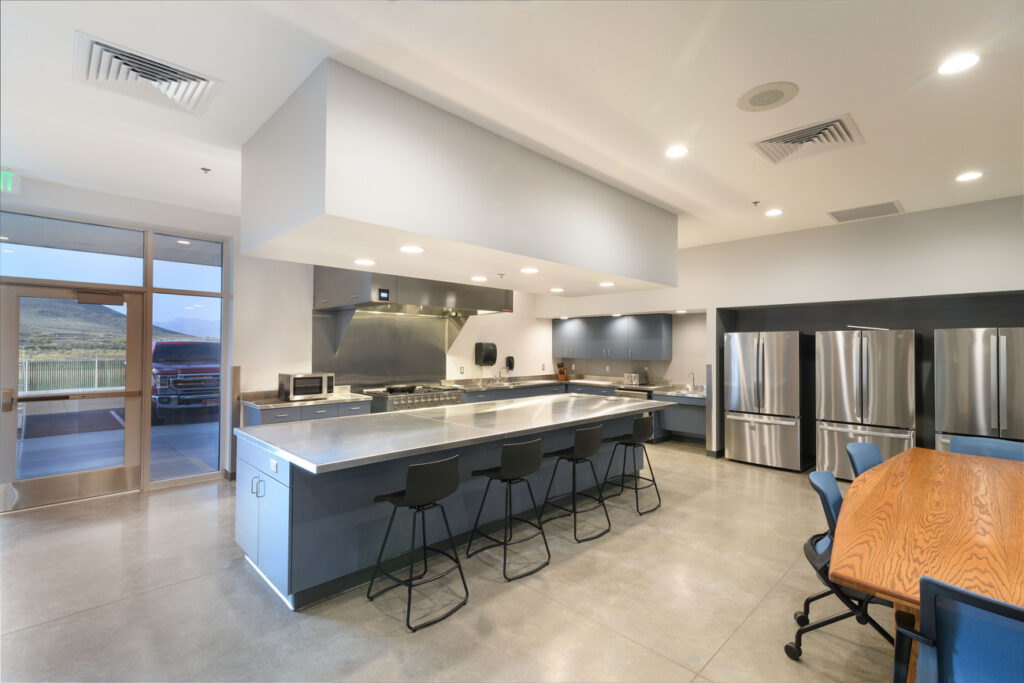
“The chief wondered if we would question their intended program of spaces,” Lujan remembered, “and I said, ‘One thing I think shouldn’t be contested is the size of kitchen and dining room, because that first holiday you guys get to invite family members to sit with you on call, I think that’s going to make all the difference.’”
Immediately there was recognition of shared purpose. The fire chief had a balancing act to pull off, between the needs of his crew members and the requirements of budget and county officials, and Lujan was extending a helping hand.
“When people start questioning the size of programmatic areas, if there’s any way I as a designer can make sure the crew can fit their families at the table during the holidays, that goes back to the culture and the community we’re serving,” said Lujan.
"The most important consideration for the design of a fire station is the safety of the firefighters, whether that means protecting them from contaminants on their clothing when they come back from a fire, or preventing truck exhaust from getting into their living spaces.”
-Vince Novak, Senior Designer, TSK
A Team That Invests in Operational Excellence
If the questions that we ask up front help us plan and design spaces that keep firefighters healthy and in top condition, that’s also in service of operational excellence. Our goal is to ensure firefighters are positioned as best as possible to protect their communities.
“Operational response time and readiness are of the utmost importance. These stations have a job to do at the end of the day,” said Principal Bill Denis.
For Denis, growing up, operational readiness was on annual display in his Southern California community.
“It was just a feature that at some point in the year, the mountains behind our house would catch fire,” said Denis, “and guess who always came to save the day? It was the fire department. We’re all piling up our stuff into our cars and taking off, and they’re the ones driving into danger. I’ve always admired that sense of duty.”
Whether it’s a wildfire or a house fire, as in every emergency, time is of the essence. Our fire station team understands that for firefighters and the people they’re protecting, every second matters.
“That timing from waking up to getting to the truck is really critical, so having a safe, clear path—that’s probably the number one piece,” said Novak.
“When we’re designing and we talk with them about response times, and critical decisions to help them get from wherever they are in the building to their vehicle and out, without hurting themselves, without fumbling around, without an extra corridor for no reason, it comes down to seconds, and seconds count. We have to make sure our decisions early on will not encumber that process for them,” said Lujan.
Digging into the details of station design time and again, in partnership with different municipalities and crews, TSK’s fire station team has become well-versed in the many features that can save time, down to hardware details.
“When we’re able to put fast doors in, that buys 20 seconds of time. That’s a half mile! A half mile of reach they didn’t have if they chose another type of door,” Kemner said. “Decisions like that put more people in safety and make their lives more secure.”
Bill Denis
Principal
For Bill, fire stations are more than operational buildings. They’re civic beacons. They must support rapid response and readiness, but also function as homes where crews live, rest, and connect. The balance between performance and livability is what makes them unique.
"We’re there to be good stewards of our clients' projects and to guide them towards solutions that give a maximum amount of function without sacrificing aesthetics."
-Bill Denis, Principal, TSK
A Team That Loves Firefighters
One reason we keep designing fire stations is we love firefighters, and our connections run deep. Take Project Manager Holly Canon: her role model is a retired firefighter—who also happens to be one of her parents.
“My dad is my real-life hero,” said Canon, “and I hope he enjoys seeing the stations that I work on.”
Naturally, many of her core memories are connected to fire stations and firefighters.
“When I was a kid, the fire poles seemed so far out from the platform, so I would always piggyback with my dad, and we would slide down the pole,” she said.
With that foundation, Canon provides a warm and welcoming entry point to fire station design for her TSK teammates who might not have worked with the typology before.
“It’s funny whenever I bring somebody new into a fire station project, there’s anxiety of working for a different type of client. But it’s like no, these guys are the most easygoing and friendly. You always know that a fireman is the nice guy out there,” Canon said.
Beyond personal connections, we also appreciate how easy it is to talk shop with crews.
“Firefighters can quickly start describing dimensions, material robustness,” said Lujan. “They are technical professionals in their own right, especially because they’re responding to emergencies in buildings. They understand how structures work. They have a level of expectation that their facility won’t become a nuisance to them, and we meet that.”
“Every department operates a little differently, so it’s great talking to fire chiefs and asking how they train a battalion to run out of their area, what an engine company’s day-to-day is like” said Denis. “Plus, we’ve both got that moustache game going on.”
Holly Canon
Project Manager
Firefighter health and safety has become a central focus of Holly’s work. She understands how much has changed since her father’s time in the fire service, especially around exposure risks and station design standards–and thus the importance of decontamination paths, cleaner transitions from apparatus bays to living spaces, and improved ventilation systems to reduce exposure to harmful materials.
"The buildings are technically complex from a design and code side, so working together we build a better project every time, we learn from previous projects what worked well, and we expand on that with every fire station."
-Holly Canon, Project Manager, TSK
A Team That's All in for Community
At the end of the day, when it comes to why TSK’s fire station team designs what they design, it all points back to community.
“I wanted to work on projects that have meaning,” said Canon, who started her career as a residential interior designer before seeking out a practice with wider reach. “Something that adds value to a community and the people that live there.”
For Senior Project Architect Fay Perez, who spent her childhood in Greece, it’s also important to create connections between fire stations and their communities.
“The reason why I got into architecture is that I saw what an impact buildings have on a culture and a people, and how they help them identify with the place they’re from,” Perez said.
After moving from Greece to Chicago at age 11 and later studying industrial design at Purdue University, Perez worked for a construction company and took part in several preservation projects around Chicago, which inspired her to pursue a Master of Architecture at the Illinois Institute of Technology. She spent the following years designing schools that reflected their communities. Today, she’s seizing the opportunity to do the same with fire stations.
“I wanted to transition to TSK because it was an opportunity to focus more on the civic element of what I liked about architecture living in Greece, how these buildings help build an identity around the people that live there,” said Perez. “It’s important to connect the history of a space with its people.”
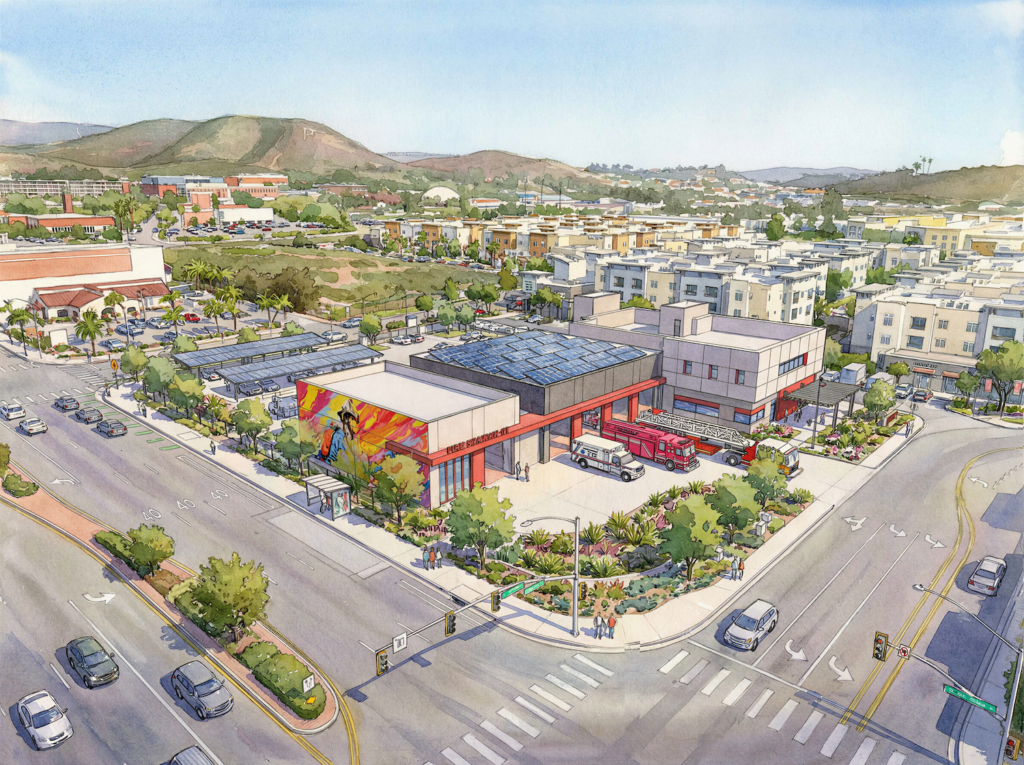
That conviction has come into play with TSK’s recent fire station work. When the team proposed a station design for San Marcos, California, one that celebrates the firefighter calling while embodying the vibrancy and warmth of its home state, TSK became the clear front-runner.
“San Marcos is a beach town, you want to do something bright, something West Coast,” said Perez. “There are fire houses in Chicago with very iconic, red wood doors and really heavy stone buildings. It’s about creating a relationship between the materials and the culture and the vibe and the vernacular of the whole city.”
Fay Perez
Senior Project Architect
Fire stations have become a natural extension of Fay’s work in connecting architecture to community identity. “They become this cornerstone of community,” she says. “They’re an iconic building in every neighborhood.” In fire station design, she describes a strong emphasis on safety and clarity.
"These buildings help build an identity around the people that live there. It's important to connect the history of a space with its people.”
-Fay Perez, Senior Project Architect, TSK
Beyond aesthetic, we also understand the responsibility that our designs carry, to embrace look and feel but also transcend it, to become civic beacons.
“To the community fire stations are a symbol of safety. Of protection,” said Novak.
“Fire stations are the heart of every community. They’re the people you call on the worst day of your life, when your house has caught fire,” said Canon. “They’re the voice of calm in a moment of tragedy, and they also provide valuable community resources.”
“Fire stations are a great way to give back to people that gave to me in a sense, growing up. Just watching them, and their sense of purpose and duty,” said Denis, “and now to give them spaces where they have great meeting areas and space to work out and a place they can be proud to host their families if they’re on shift over Thanksgiving…You’re giving to people who help the community, which is a great way to give back, but you’re also still bringing that sense of community.”
Of course, it takes a healthy sense of community to promote one. No surprise, then, that TSK’s fire station design team is a tight-knit crew.
“Everybody brings their passion, no ego, no competition, not ‘I want this to be my design,’” said Novak. “When you’re focusing on what the client and user need and you’re all in one direction, it makes it easier and more fun.”