




MOREgroup’s Director of Planning said she’d never be an educator.
Decades later, she’s changing the face of education.
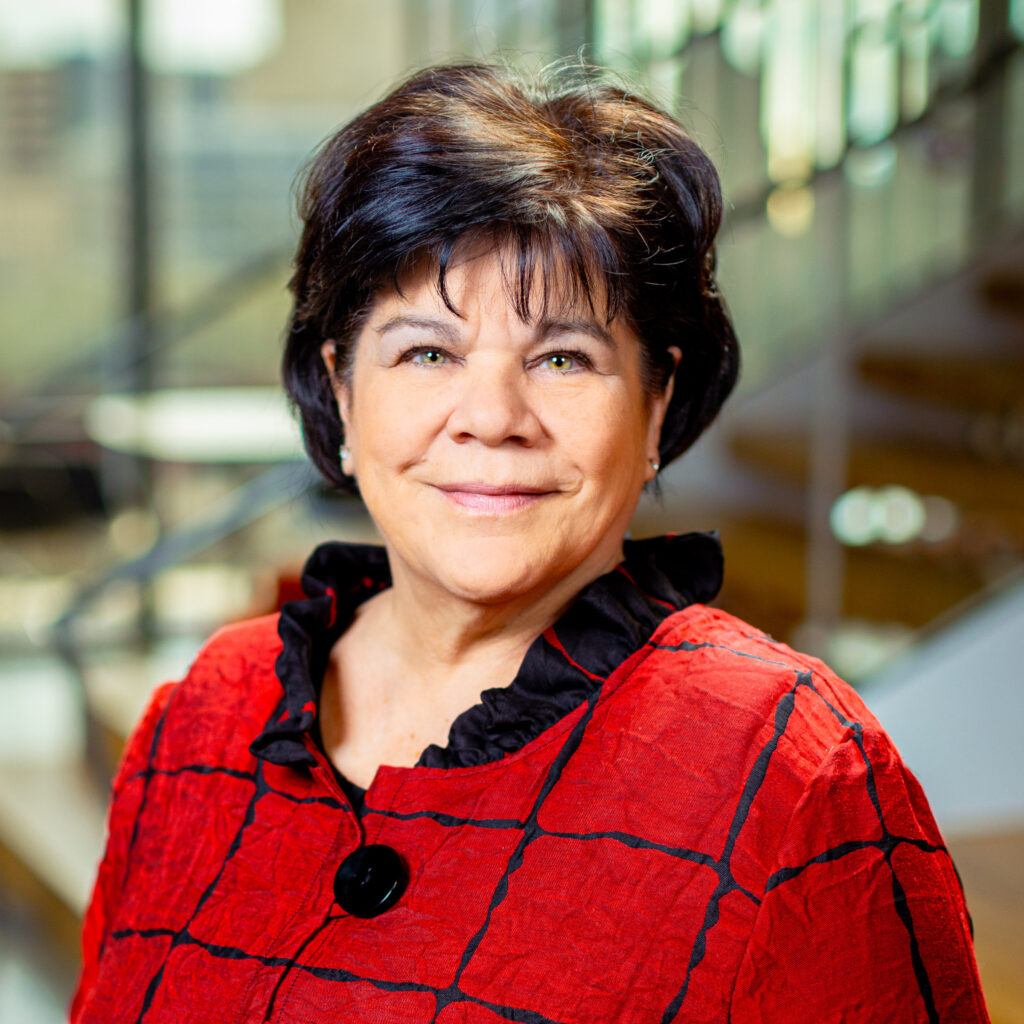
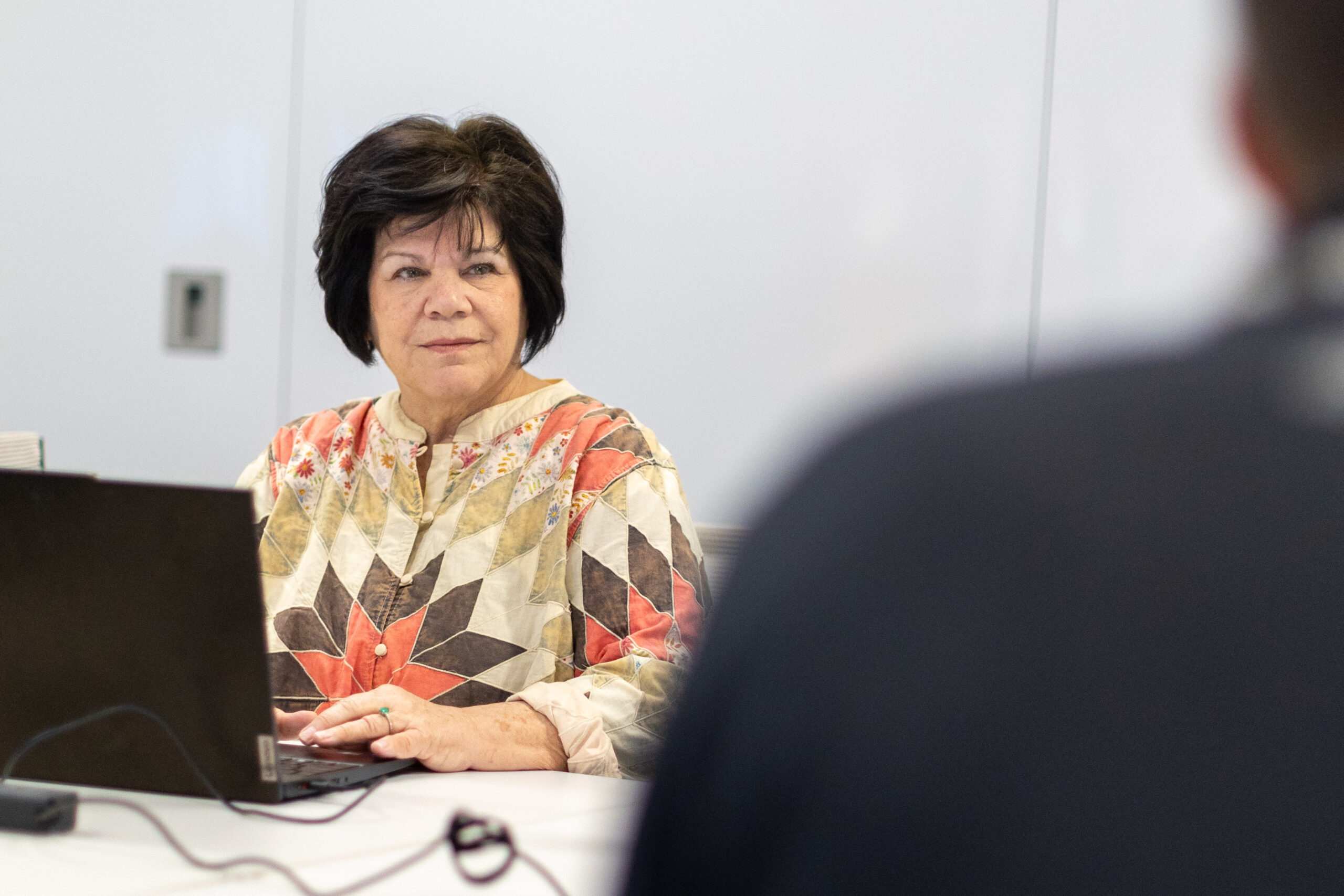
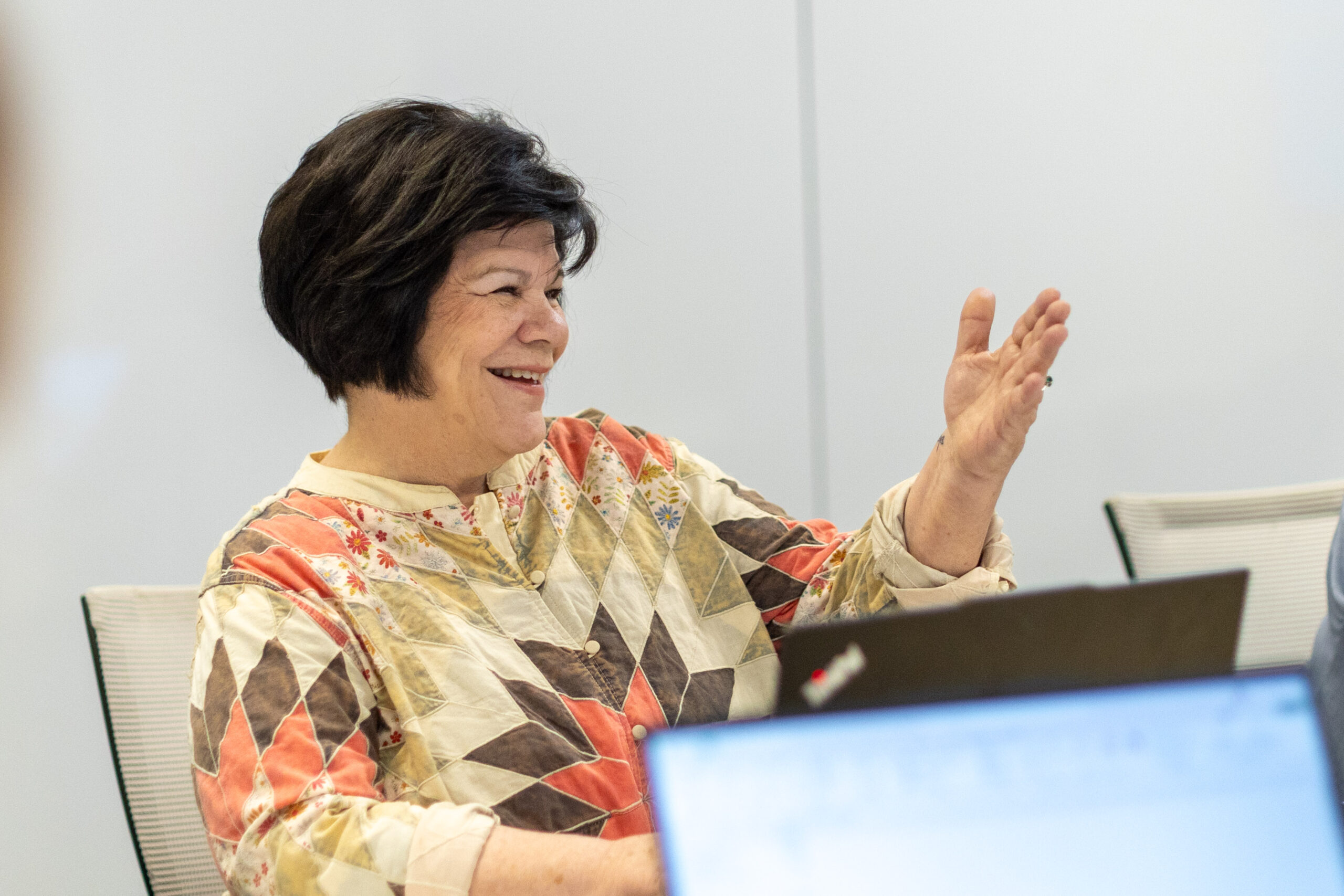
Though Holly Teague grew up around educators, she never wanted to be one herself. Ironic, then, that she’s now one of the most influential educators in the nation.
“I was not going to do it at all. I wanted to work for Taylor Publishing Company and be a rep for high schools on yearbooks,” she said. “I was the editor of my yearbook, and I loved that.”
Since that time, she’s gone from being a teacher to a principal to occupying some of the highest positions of school district administration in Texas. Today, she’s impacting schools and districts from outside of the education system as the Director of Planning at MOREgroup, where her work has shifted the paradigm for early learning in her home state of Texas and beyond.
But it all started with a reluctance to teach.
Moving the Line in the Sand
“Eventually I decided, ‘I’m going to teach, but I’m never going to be a principal,” Holly said. Rather than go into administration, she wanted to be the best teacher ever—and besides, she had a Master’s in curriculum writing. If she ever left teaching, it would be to work with her degree specialization.
She wanted to be the best teacher ever
Her trajectory shifted again, however, when she was nominated for the Meadows Principal Improvement Program. Developed and operated at East Texas State University (now Texas A&M University-Commerce), the program was designed to fast-track teachers seeking administrative licensure. For a year and a half, she taught for half the day and took leadership courses for half the day, and at the end of that time, she moved from Cedar Hill to Irving to be an assistant principal.
Unexpected Fulfillment
When you get down to it and sit there in a classroom with a teacher and a student, it's universal
Despite her initial reluctance, Holly’s years as a teacher were formative, and she still keeps in touch with former students from those days. But it’s her time as principal that holds her dearest memories from being an educator. Her campus was home to the district’s children with severe disabilities.
“I love kids that will always be the responsibility of their parent,” she said.
One day, one of her favorite students punched a hole in the wall. When she asked him what happened, he said he couldn’t help it.
“He looked at me and pointed and patted the carpet next to me,” she recalled, “and I said, ‘You can’t punch your fist through the wall!’ He said, ‘No, sit down here.’ So I finally did, even though I was in a dress, and he said, ‘I love you, fatty!’”
The student was 10 at the time. Now he works as a school aid.
The mother of another student wanted pet therapy for her daughter, but the school had to be mindful of other students who might have allergies. After some research, Holly concluded that the therapy would be feasible so long as the pet didn’t have dander—and the only animal that met the requirements was a pig.
“Precious the pig lived in a 4th grade classroom with a litterbox,” she said. “During the day she got to go wherever she wanted to go. She got into the 3rd grade classroom one time and ate all the lunches. So we had to get on the PA at 2:45 and say, ‘Whoever has Precious, send her home.’”
A Crucial Connection
Later, as Weatherford’s Assistant Superintendent of Administrative Services and Human Resources, Holly made a connection that became crucial to her career as an early education leader. Dr. Jim Vaszauskas was his name, and he was a 9th grade principal.
Holly and Dr. V shared a common goal: to achieve student improvement through operational excellence. Their ambition was rooted in a framework called the Baldrige Criteria for Performance Excellence, founded by the U.S. government in 1987 to propel business but later adopted by education and healthcare institutions. Holly’s district was among those institutions, having folded Baldrige into its value system for advancing learning. The experience made a lasting impression on her outlook, and it would have a direct impact on the work she and Dr. V would later undertake to innovate in the field of early education.
“That continuous improvement journey, he was on it, we were on it, we were all on it together,” Holly said. “It changed my educational career, it changed my life, it’s how I look at things: processes and systems, and how things work, and every single time you can get better at what you do.”
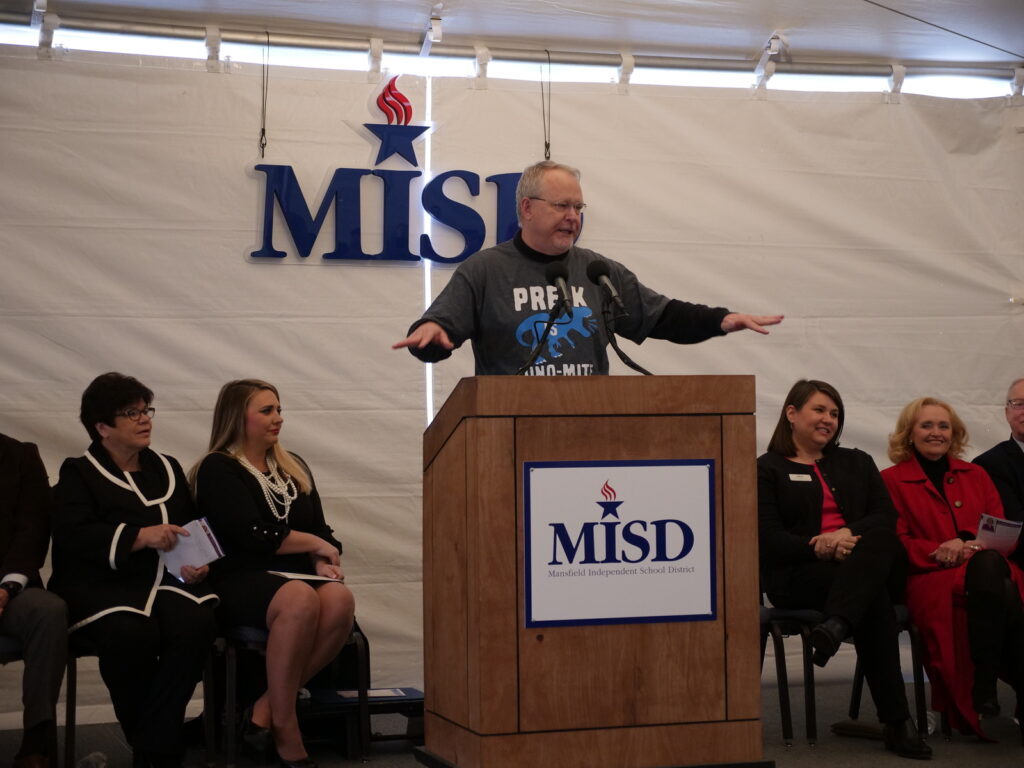
It was after Dr. V left and later became Mansfield’s Superintendent of Curriculum and Instruction that he invited Holly to take yet another position she didn’t want: Associate Superintendent of Student Services.
“She is, in my mind, a brilliant mind,” said Dr. V. “Incredibly smart. She had early literacy experience. She had a unique ability to build relationships, so our early literacy curriculum people, principals, the board, all trusted her. And we shared the same vision.”
Just as she had with past educational career opportunities, Holly initially refused Dr. V’s offer. But when he told her the position would center on strategic improvement as part of the Baldrige program, she agreed—tentatively.
“I’ll give you two years,” she remembered telling him. “That’s all.”
Discovering Early Learning’s Differentiators
In her new role, Holly took a deep dive into early learning research and learned some astonishing facts. Her Baldrige Goal of Continuous Improvement was to have all kids learning on or above level by 3rd grade. But at around the 85% mark, it seemed the needle would move no further.
She asked her team to learn about the kids who, by 2nd grade, were not reading on level. They learned that one percent were dyslexic, three percent had special needs, and another group spoke English as their second language. A significant portion of each population, research showed, had the ability to read on level if given additional time.
The last 5%, among whom Holly determined a timely impact could be made, came from poverty. The only difference between this student population and others who were reading on level was their prior level of knowledge and experience—which is exactly what Early Childhood Centers (ECCs) aim to improve.
“We researched why kids who come from poverty don’t read on level, and it’s all about background experiences” Holly said. “So in an ECC they walk into the space room, and what are they getting? It’s all about space. A is not for Apple, A is for Astronaut. C is not for Cat, it’s for Comet. They’re getting all this background knowledge in a way that’s fun. They can’t wait to get to school. We’re moving them closer to their peers who don’t come from poverty.”
I want you to go find the best early learning center in the country
In light of these findings, Dr. V asked Holly to bring an ECC to Mansfield, and to figure out what kind of facility would be the most effective.
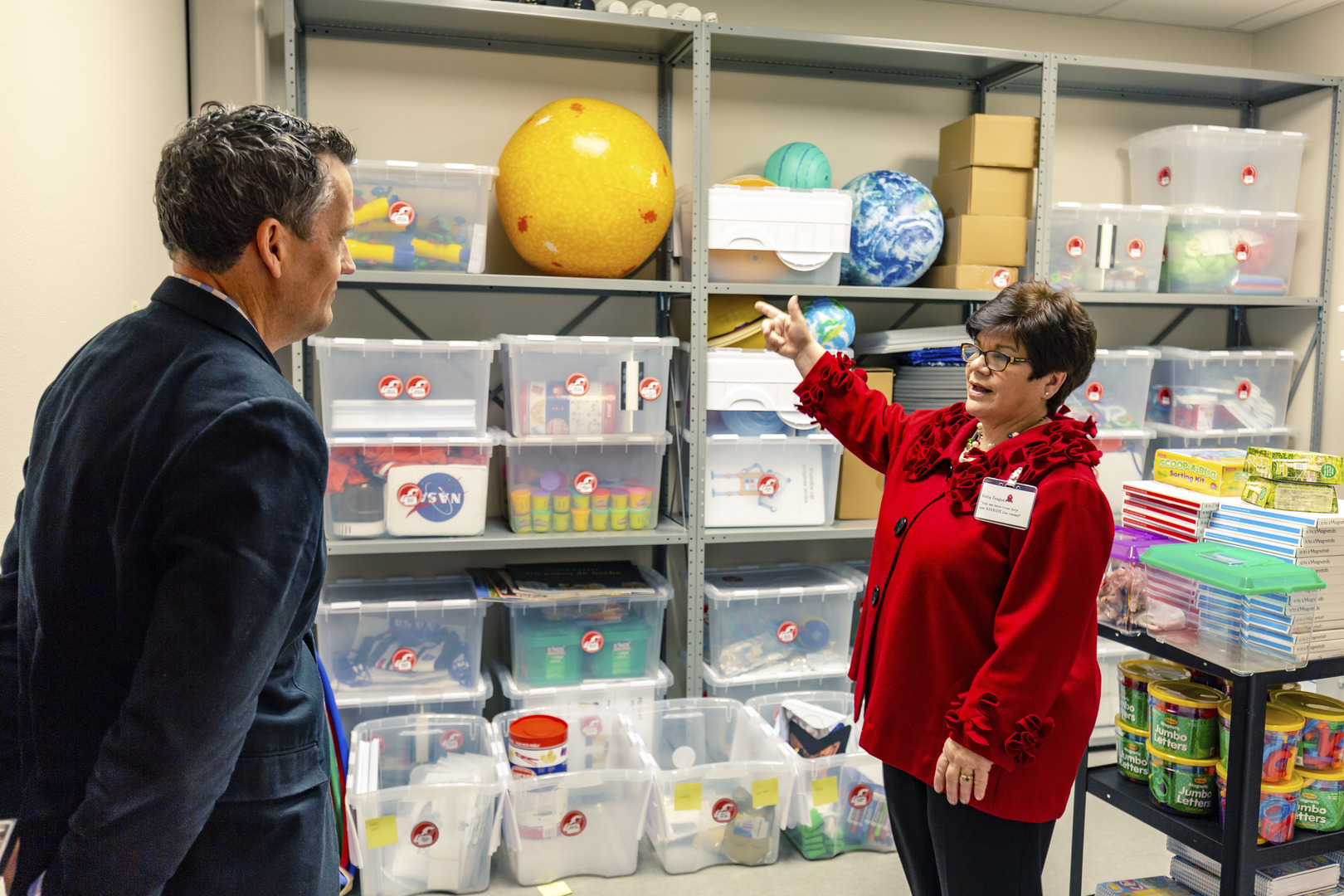
“I brought Holly in and said, we’re going to build an early learning center,” Dr. V recalled. “We have the money, Huckabee will design it, and I want you to go find the best early learning center in the country—actually I think I said the world.”
Changing the Trajectory of Early Learners Through Innovative Design
Holly found out in the field that though many ECC facilities were beautiful, they weren’t exactly innovative. They boasted colorful rugs, colorful chairs, and other fixtures that gave them a pleasing appearance, but the learning centers themselves took a standard approach to helping students internalize a standard curriculum.
It was in Corpus Christi that Holly found a center called Region 2. The facility was experiential, in line with the kind of facility she felt could make a difference, but it was mainly used as a field trip destination for kindergarteners. Any given class could generally only go there once per year.
“Once we went in there, it clicked for all of us how meaningful it was,” Holly remembered. “You watched kids, how engaged they were in the learning, and heard the vocab they were using based upon the theme. Usually, a four-year-old wouldn’t be talking about photosynthesis. We were meeting and we had this little gathering room with steps and I was sitting next to my Assistant Superintendent for C&I, and I said, ‘We can do this every day. We need to rethink what we have planned.’”
Of course, there were funding challenges, and for a time, it seemed the group would need to scale back their ambition.
“She came back with a plan, and we did a cost estimate, and I said, okay, how about the second best early learning center in the world?” Dr. V said.
But in the end, some innovative programming and a second visit to Region 2 sealed the deal. Rather than including both experiential and traditional classrooms in the new facility’s layout, the group opted for only experiential classrooms. That reconfiguration, combined with Dr. V joining the next trip to Region 2, convinced everyone that the project could move forward.
“I walk in,” Dr. V recalled, “and the cutest little four-year-old girl in the world grabs my hand and pulls me over and into the room and starts talking to me about numbers.”
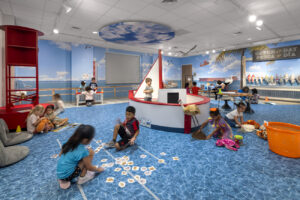
“He went into the ocean room,” Holly remembered, “and this little girl had a fishing pole and she would roll a dice and it would say ‘1,’ and she would have to catch one fish with a magnet and put it on the wall. Then she would get a ‘3,’ catch them, and count and to see how many there were all together. The aid on staff said, ‘She is in trouble all the time back at school, she has to be isolated.’” Here, however, she was completely engaged.
“It was a total setup,” Dr. V said.
But to Holly, Dr. V’s change of heart was inevitable.
“You can’t help but when you watch kids,” she said. “It was a risk analysis. ‘Is spending this much money going to make a difference for kids?’ And yeah, it does.”
Toward the Future of Early Learning
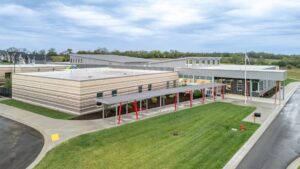
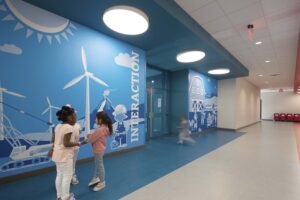
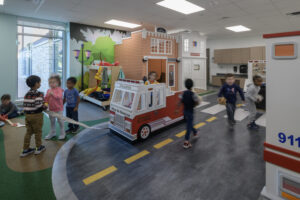
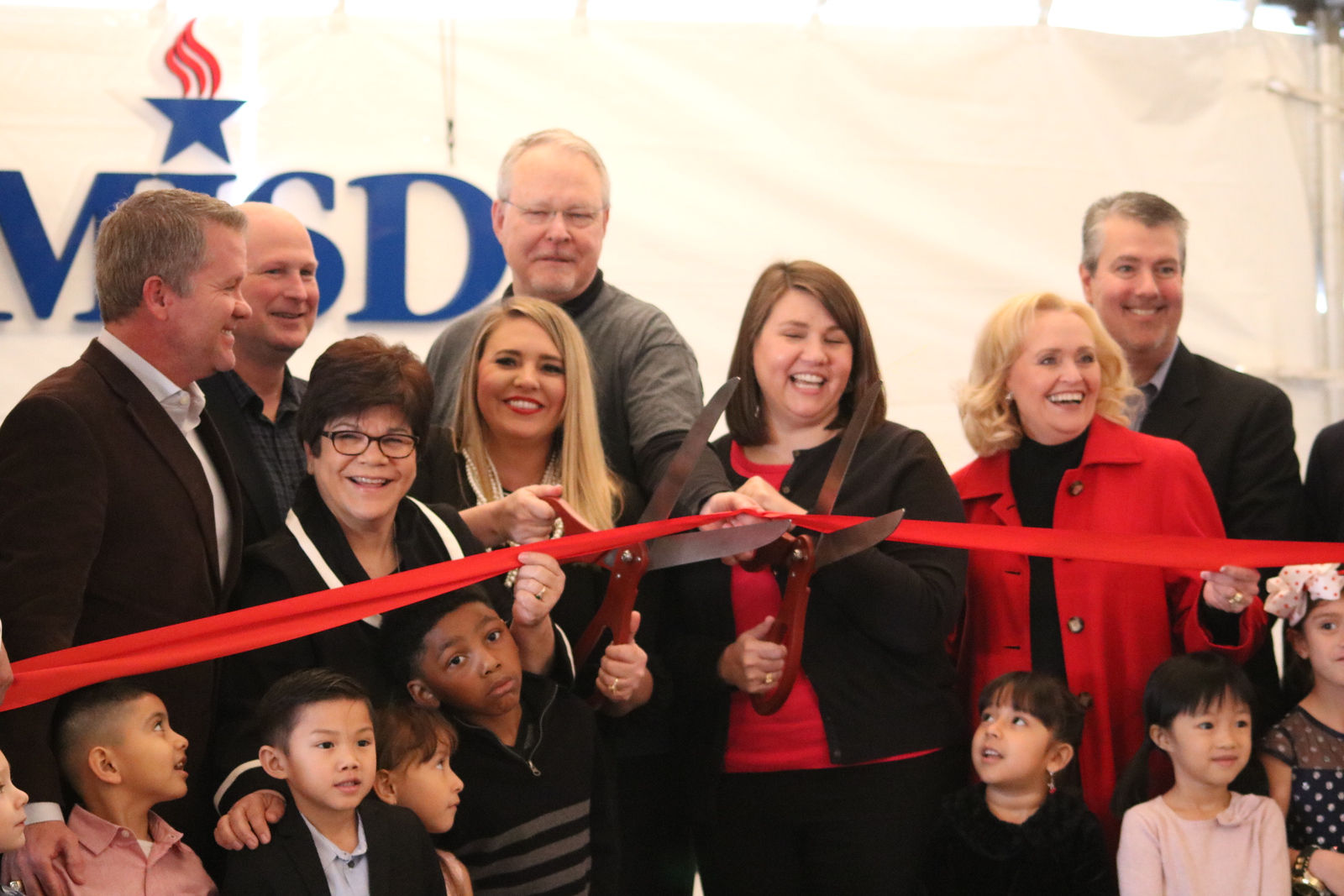
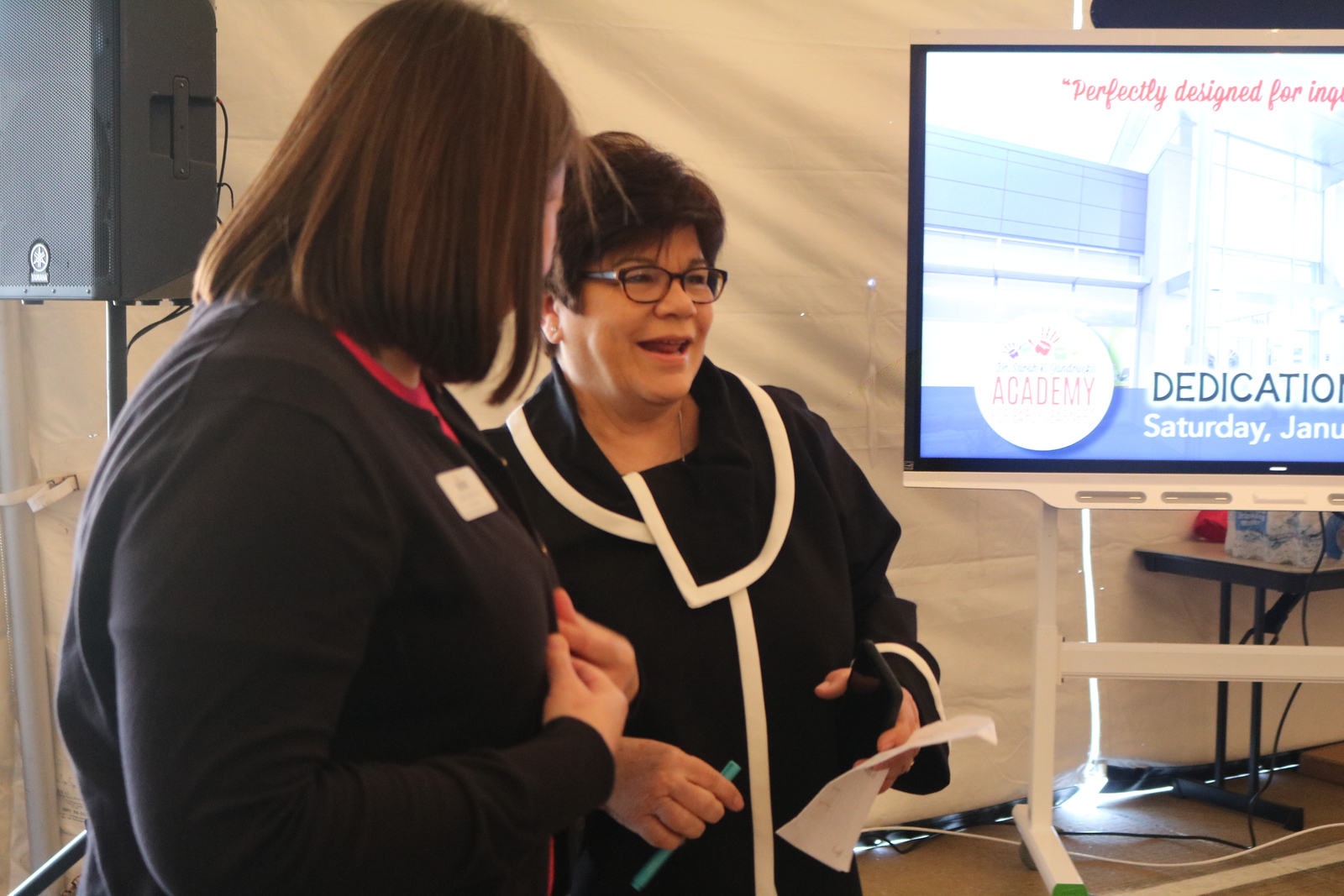
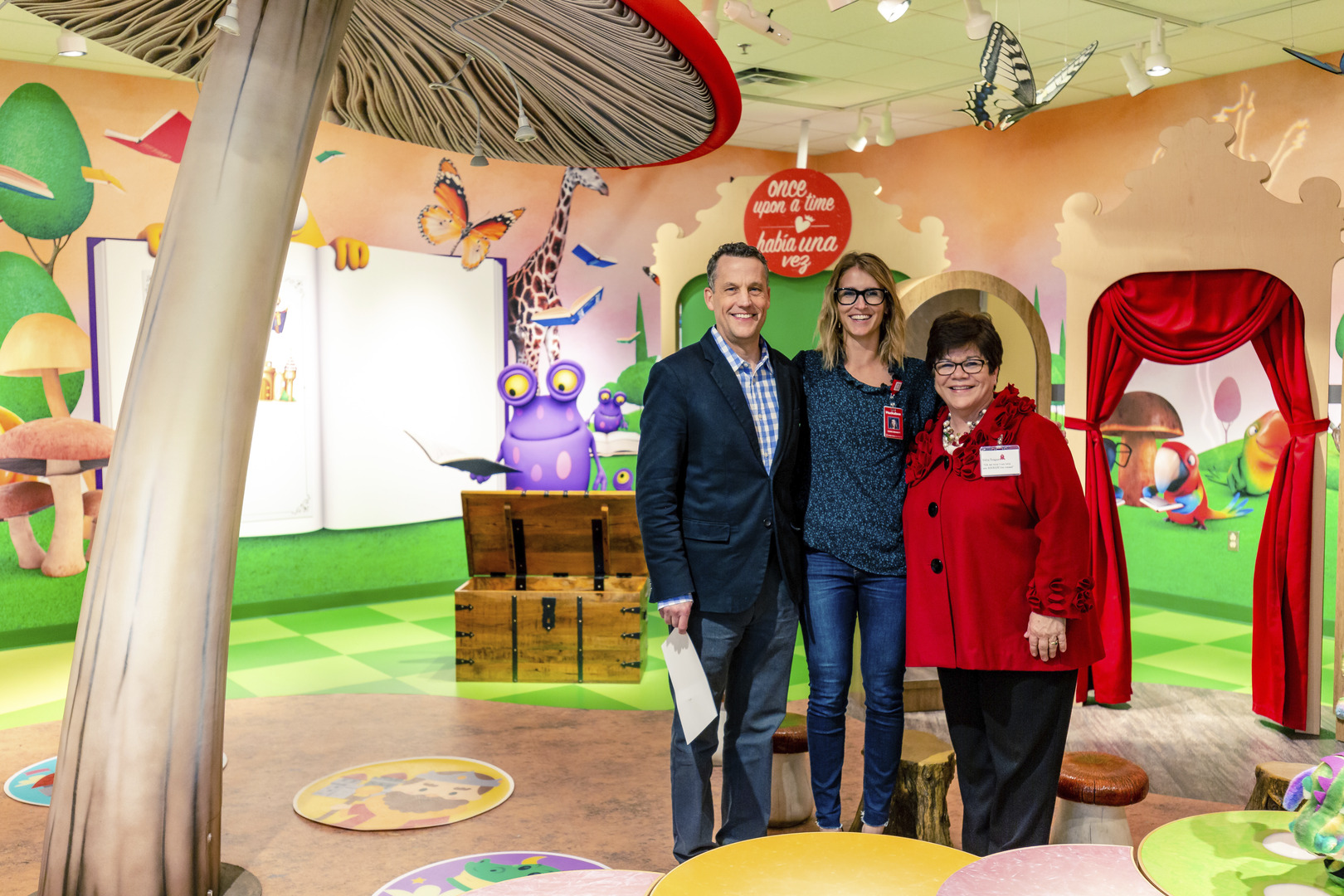
And so was born the Jandrucko Academy for Early Learners, an ECC with classrooms that resemble interactive museum exhibits, which districts across the nation are now striving to emulate. The experience of working on the project was revelatory, not just for Holly, Dr. V., and MOREgroup’s Planning team, but all across MOREgroup.
“It is a memorable point in my career that I’ll never forget because it’s like, why aren’t we dreaming more? Why aren’t we aspiring for more? Why aren’t we looking for something that’s not the norm?” said Konrad Judd, MOREgroup’s Sr. Executive Director of Education Design. “And to translate something that’s for a field trip or museum experience and make it every day, that was an ah-ha movement for me. Because often we step back and say, well that’s not possible. But this group said, no it is, and it will be. And to work with this group, with that mindset, it was exceptional. It was magical.”
With each successive ECC, MOREgroup gets better and tailors their work to the needs of the districts they work with. From basing play centers on district CTE pathways, to housing kindergarten and pre-k in the same facility, to adding music and art programs to the curriculum, MOREgroup continually evolves, customizes, and improves upon the groundbreaking legacy they founded with the design of Jandrucko.
Today, MOREgroup’s early learning facilities are making an even wider impact, with new ECCs being planned and designed in California, South Carolina, and Colorado. But regardless of where the facilities are implemented, for Holly, they always hearken back to one thing.
“Even though rules are different and states are different, when you get down to it and sit there in a classroom with a teacher and student, it’s universal,” she said. “A universal language, a universal passion and love that we get to be a part of.”