
From the onset, we endeavored to make Roper Hospital Medical Center a project that celebrates and resonates with its community. To that end, we went all in on collaborating with stakeholders, conducting more than 500 hours of meetings with 200 staff members over the course of eight months, and engaging the client’s board to work with community leaders and understand the design elements that would be important to North Charleston.
But while engagement and feedback are essential to any project, on this one, we also saw an opportunity to do more. All too often, healthcare facilities are designed like massive fortresses, opaque and set apart from the people they serve. By contrast, we envisioned a campus whose very design would resonate with its community.
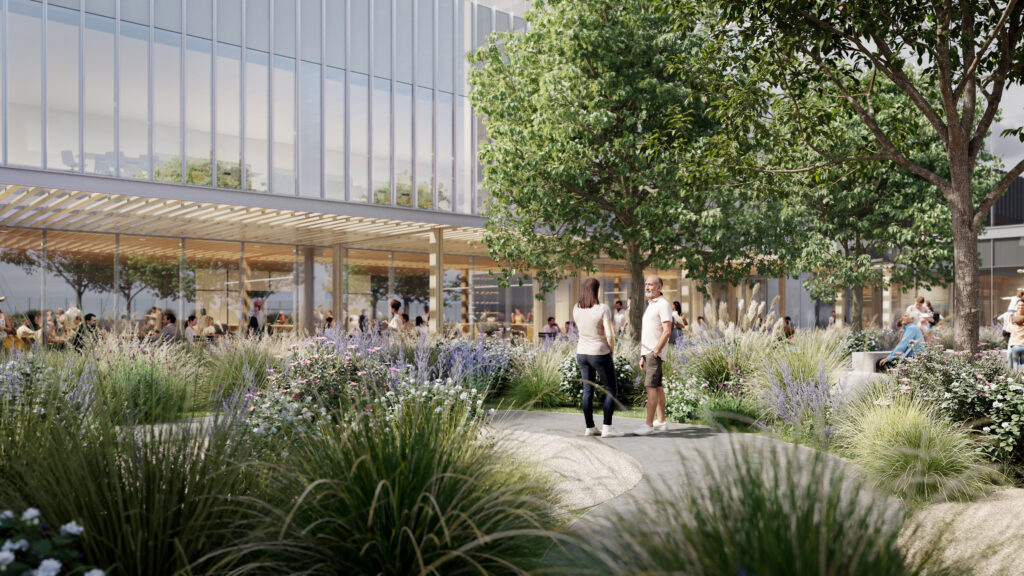
For Roper Hospital Medical Center, the environment was key to bringing that vision to life. By embracing regional beauty, porous edges, walkable connections, and outdoor spaces, the design creates a sense of place for the campus, one that invites the community in and encourages patients, families, and staff alike to enjoy the restorative power of nature.
A Sense of Place Rooted in the Natural Beauty of the Lowcountry
Key to activating the community through design was establishing a connection between the campus and the Lowcountry region it calls home. But for the team, “regional” did not necessarily mean a building styled in the aesthetic of the old south.
“In designing the new state-of-the-art medical campus, our strategy to connect to place rested not upon references to historic architectural styles, but on connecting to regional precedents for the relationship of building and landscape,” said E4H Director of Design Scott Habjan. “The gardens and landscapes of the Lowcountry were a tremendous source of inspiration.”
Those ties to the landscape include live oak trees, curated gardens, and precedents provided by local destinations like Boone Hall’s Avenue of Oaks and Charleston Waterfront Park.
Intuitive Arrival
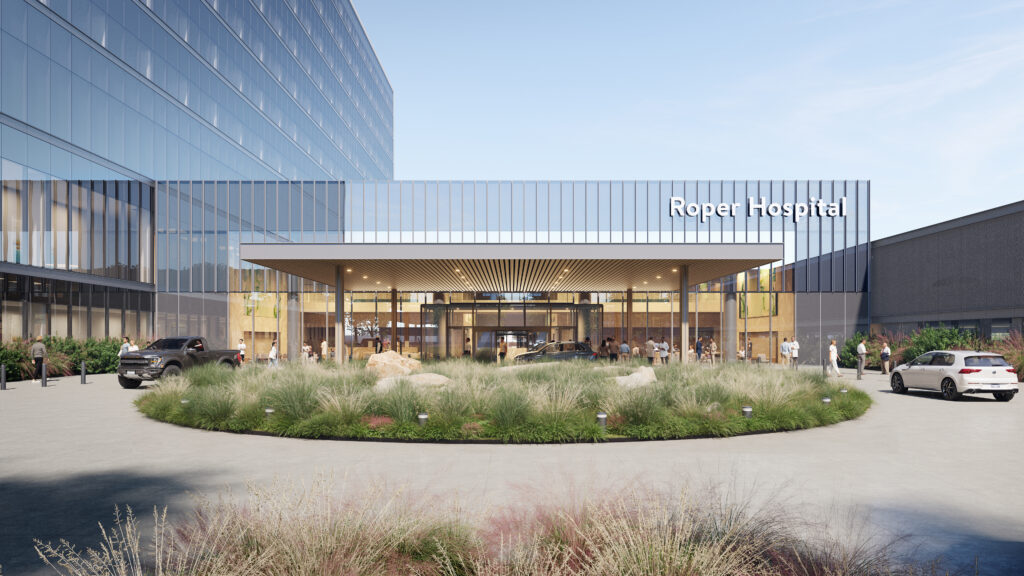
The invitation to the community begins with the drive to the facility. Understanding that most North Charleston visitors will be arriving by car, we choreographed a gracious and seamless arrival sequence culminating in a landscaped forecourt.
Whether visitors are dropped off in front of the entrance or are walking into the lobby from the connected parking garage, they’re immediately greeted by an expansive space adorned by natural light, regionally inspired artwork, and materials that recall the coastal beauty of the Lowcountry.
However, the lobby does more than deepen the project’s connection to nature—it also orients visitors. At the center of this double-height space is a circular welcome desk that acts as a compass, pointing visitors toward dining, outdoor spaces, and other amenities on the ground floor, as well as to the elevators that lead up to treatment and clinical spaces in the patient tower above.
A Greenbelt to Bring It All Together
Cohesion is key to creating any sense of place, which proved challenging on a campus that spans multiple parcels: one on which the hospital building resides, a smaller plot across the street that’s dedicated to staff parking, and another large parcel across a major road, where the medical office building and other ambulatory facilities will live.
The campus greenbelt creates a walkable connection between all three parcels, establishing a campus-wide atmosphere of natural beauty. Stretching across more than 1,000 feet, this 12-foot-wide pedestrian boulevard defines a soft, permeable threshold for campus. Rather than pulling buildings right up to the property line, the design allows the landscape to breathe around campus’s structures, inviting patients, staff, and visitors to enjoy a restorative moment under the shade of the live oaks planted along the walkway.
Choose Your Own Connection to Nature
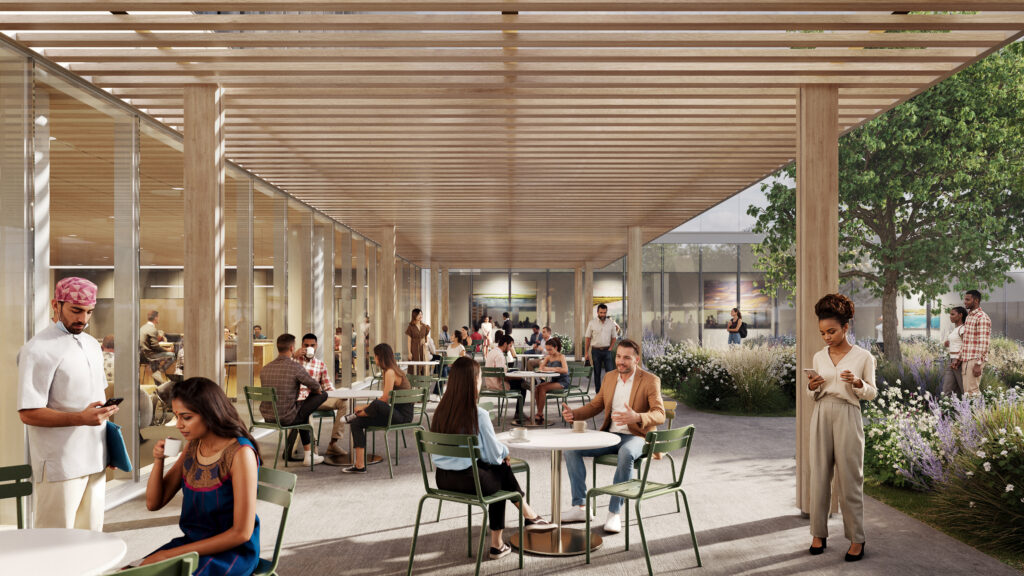
In addition to the greenbelt, the café just off the lobby features a glazed wall that bathes the interior in natural light. Outside, a dining patio and healing garden provide places of respite to gather, linger, and reflect.
Spaces like these offer a sense of calm in moments when it might be needed most. They give patients and families the choice to either be in a lobby infused with interior elements inspired by the regional landscape, or immersed in that landscape. Importantly, they also give staff another space to decompress.
Connecting with community is essential for health systems as they endeavor to positively and meaningfully elevate patient experience. In an industry where open space and real estate are often at a premium, medical campus outdoor space frequently gets marginalized and eventually built upon. Roper Hospital Medical Center stands as a proud exception. Inspired by its Lowcountry setting, the design integrates landscape in a way that celebrates its place, harnesses biophilic design, and connects to its community in a meaningful way.