Case Study: Adaptive Reuse on a Constrained New York Site
Case Study, Healthcare
Details
Client
Mount Sinai Health System
Project
Mount Sinai Harlem Health Center
Case Study Focus
Adaptive Reuse
Practice
Healthcare
Brand
E4H
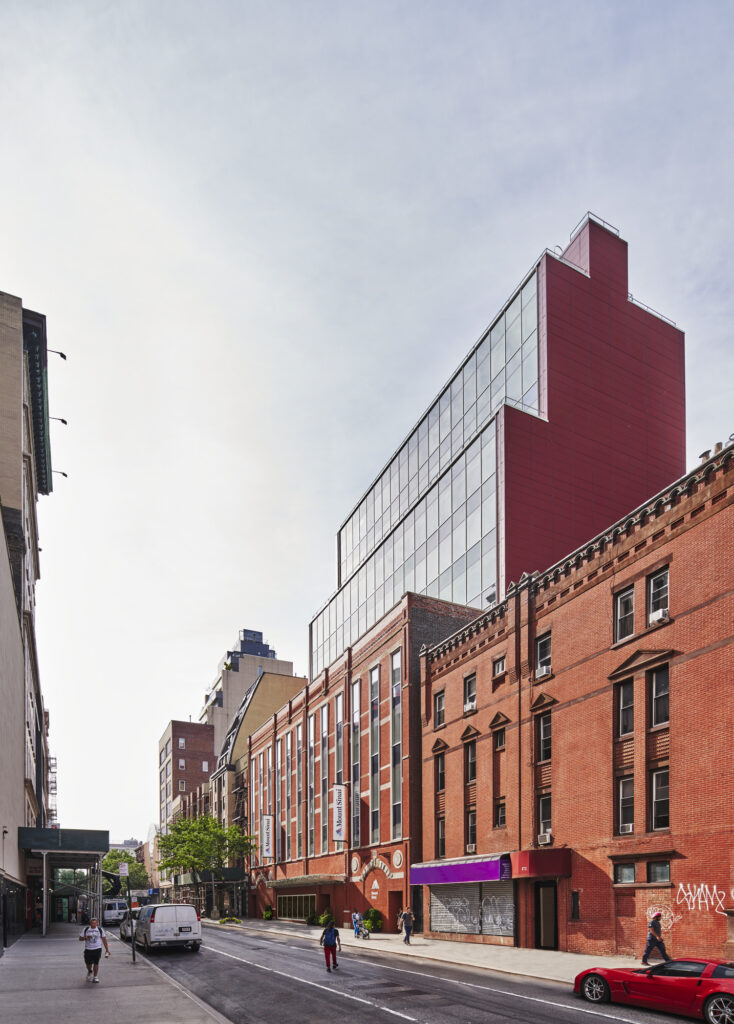
Harlem’s tight urban footprint demands a different kind of solution. Instead of fighting site limits, our healthcare experts used them as a framework to transform an early-1900s parking garage into a modern 12-story medical office building for Mount Sinai Hospital. The Harlem Health Center is a model for how adaptive reuse can elevate community health infrastructure by establishing neighborhood access to essential care and renewing an aging structure.
Harlem Health Center removes the need for residents to travel beyond their neighborhood for care, providing localized treatment options and services across multiple levels and program types to create a key community resource.
Improving Community Health
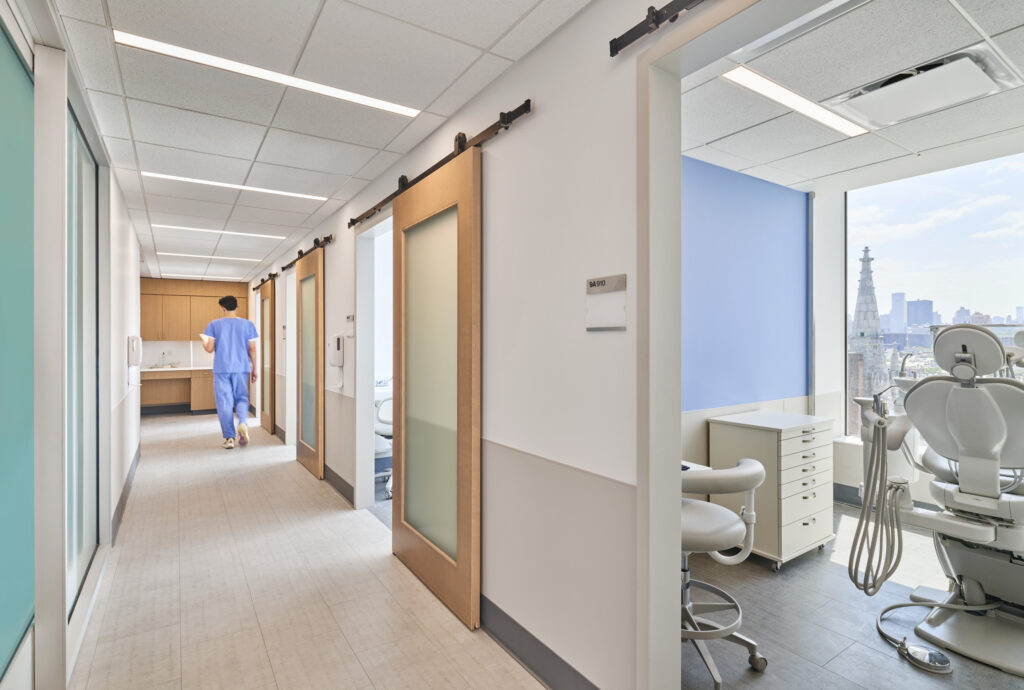
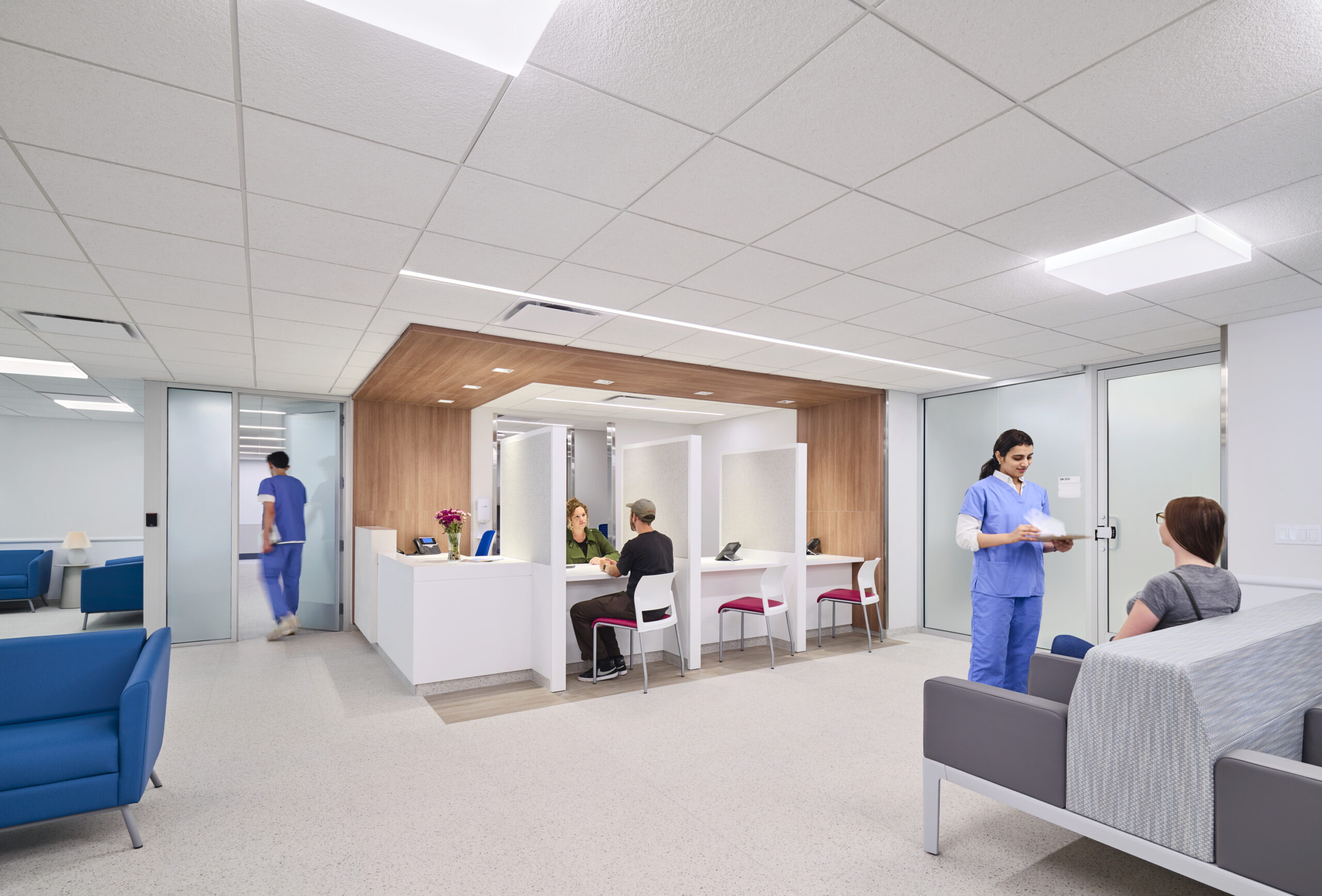
Clinical and therapeutic programs are distributed throughout the building, placing primary and specialty care on the lower levels, with therapy, dental, and other departments above. The vertical organization maximizes accessibility for patients and providers by keeping everything compact and under one roof.
The medical office building is also home to the Diversity Innovation Hub, an energizing community-centered program that connects Mount Sinai’s clinical expertise with Harlem’s local innovators to promote equity in care.
Its meeting space boasts moveable, writeable glass panels and flexible furniture that allow groups to configure it for meetings and breakout sessions. Encouraging innovation and fueling the open exchange of ideas, it’s a place for residents to advance solutions that help expand access and improve outcomes for a healthier Harlem.
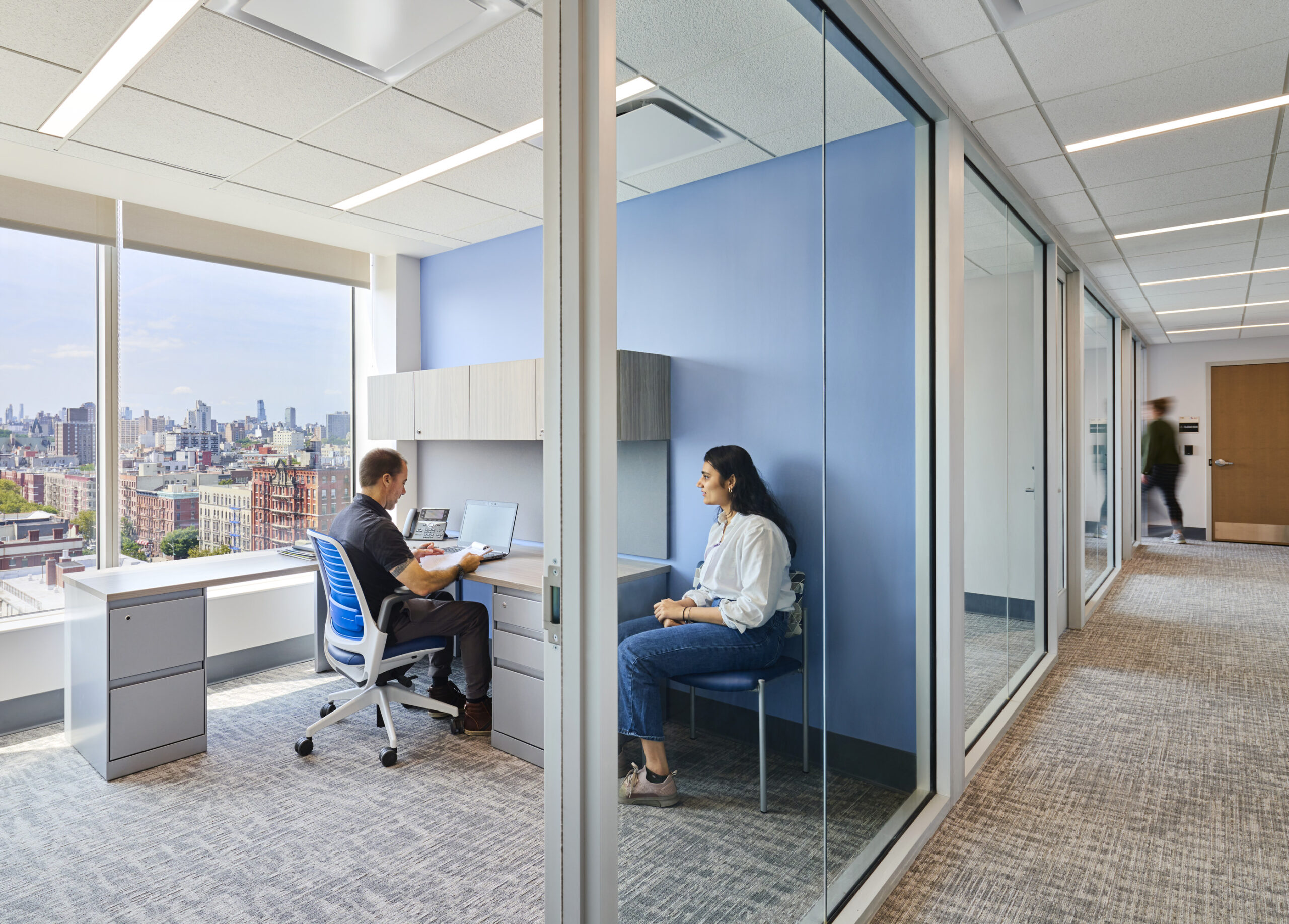
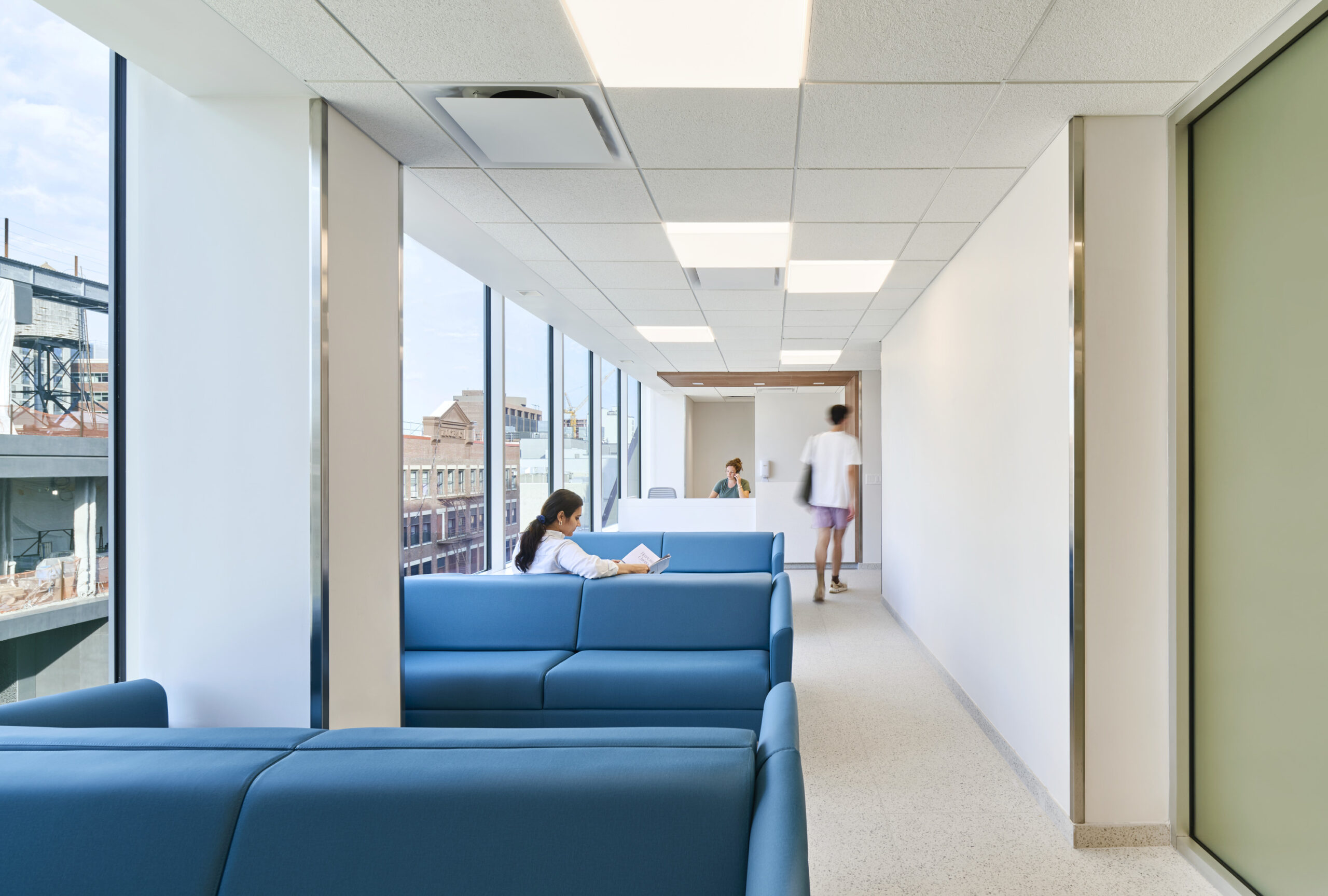
The facility’s design emphasizes wellness through a palette of blues, creams, and energizing accent colors that are paired with natural wood tones and extensive glazing. Together, these elements work with daylight to soften the clinical environment and bring in bright skyline views to the upper floors. Developed through engagement with caregivers and physicians, the design supports comfort, reduces stress, and creates a sense of openness beyond traditional healthcare spaces.
Taking Shape in Tight Limits
The team delivered a unique “wedding cake” form for the structure, sitting it atop its brick garage. The building rises, with floors progressively set back to create a terraced or “stepped” look rather than a rectangular block. Its vertical layers fit within the city’s zoning regulations, which require buildings to be set further from the street as they climb upward.
Incorporating a stepped design allows more sunlight to filter around and in front of the building and onto the street below. It seamlessly integrates into the streetscape and maximizes clinical space on its compact urban site to balance zoning compliance and density.
Building Up…and Down
Visitors may only see the project’s calming interior and terraced exterior, but significant structural intervention was required to stabilize and modernize the building. The original four-story garage relied on a heavy timber system that no longer met city code standards. Portions of the aging timber frame were selectively removed to introduce a new steel structure that would reinforce the building from within and preserve the rectangular footprint as well as overall massing.
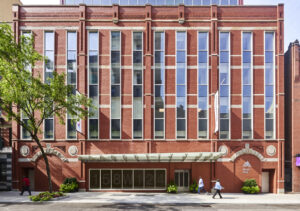
Ground-level work involved removing brick from the garage and reapplying it to integrate with the existing facade. The resulting look retains the historic feel while differentiating itself from contemporary glass above.
Below in the basement, space was excavated to place new concrete piers, and coordination efforts with the structural engineering team ensured the foundation was strong. The earthwork also opened room to implement newly designed water tanks for a new fire suppression system. Preserving this lower space allowed Mount Sinai to expand upward and support clinical program spaces.